OUR PERSPECTIVE

The confidence to explore begins with honest answers.

The questions families ask before they ever book the trip—and the principles that have shaped every journey we've taken.

Before our first international trip with a toddler, we searched for certainty.

Packing lists.

Perfect itineraries.

The "right" age to travel.

Every answer seemed to begin with everything that could go wrong.

But once we actually started traveling, we realized confidence doesn't come from eliminating uncertainty.

It comes from experience.

These are the six ideas we've returned to before every trip since. Not rules. Just the mindset that's helped our family see more of the world together.

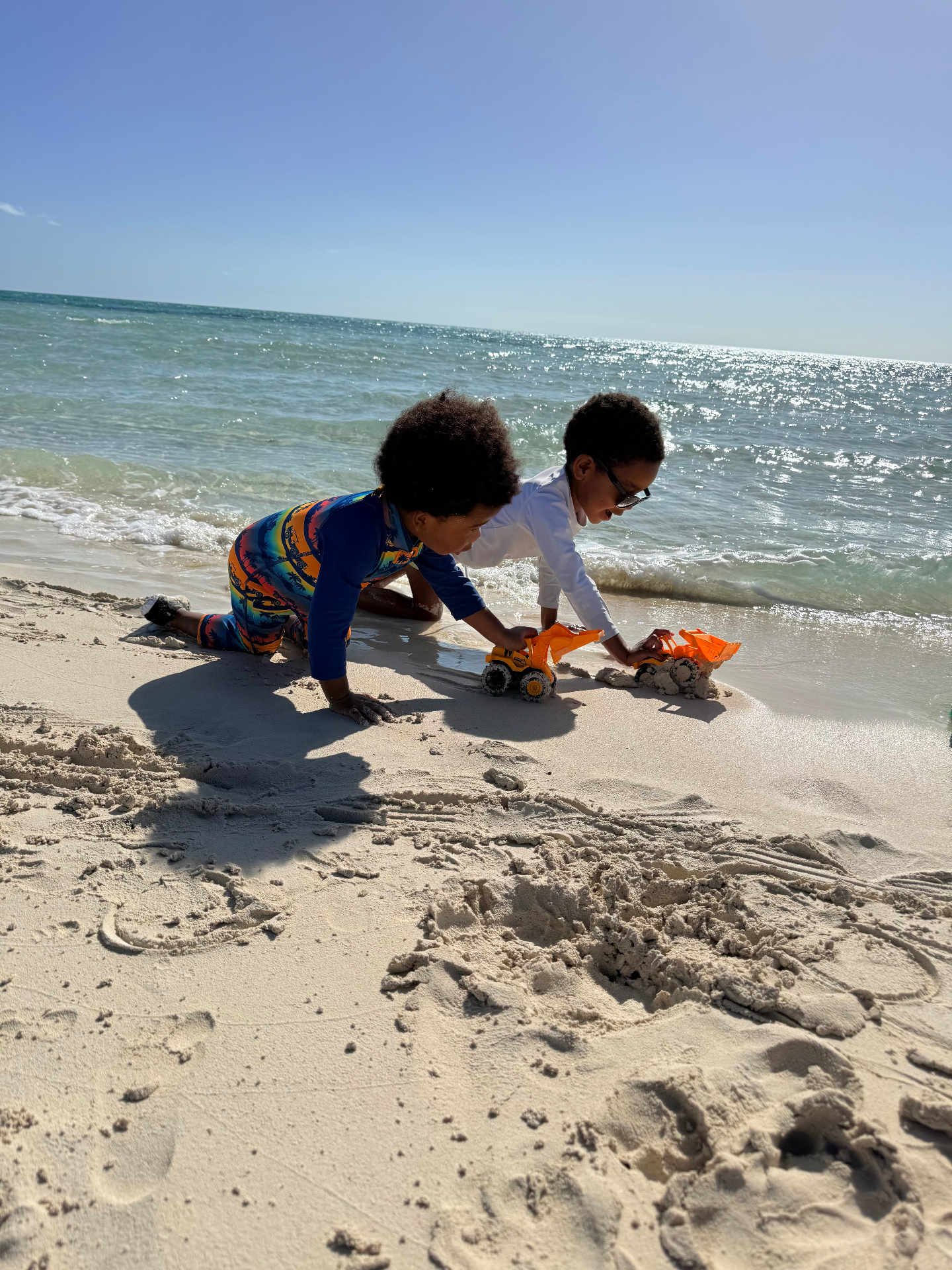
Two children playing with toy trucks on a sandy beach at the water's edge
I.

Choose the destination for your season.

Before every trip, we ask one question: What kind of trip does our family need right now?

Sometimes the answer is a quiet villa in the Portuguese countryside. Sometimes it's a city filled with playgrounds and museums. Sometimes it's a beach where no one feels rushed.

We've learned not to chase destinations simply because they're famous or trending. We also don't cross places off the list because we're traveling with young children. If kids live there, kids can travel there.

The destination matters—but choosing one that fits your family's season matters even more.
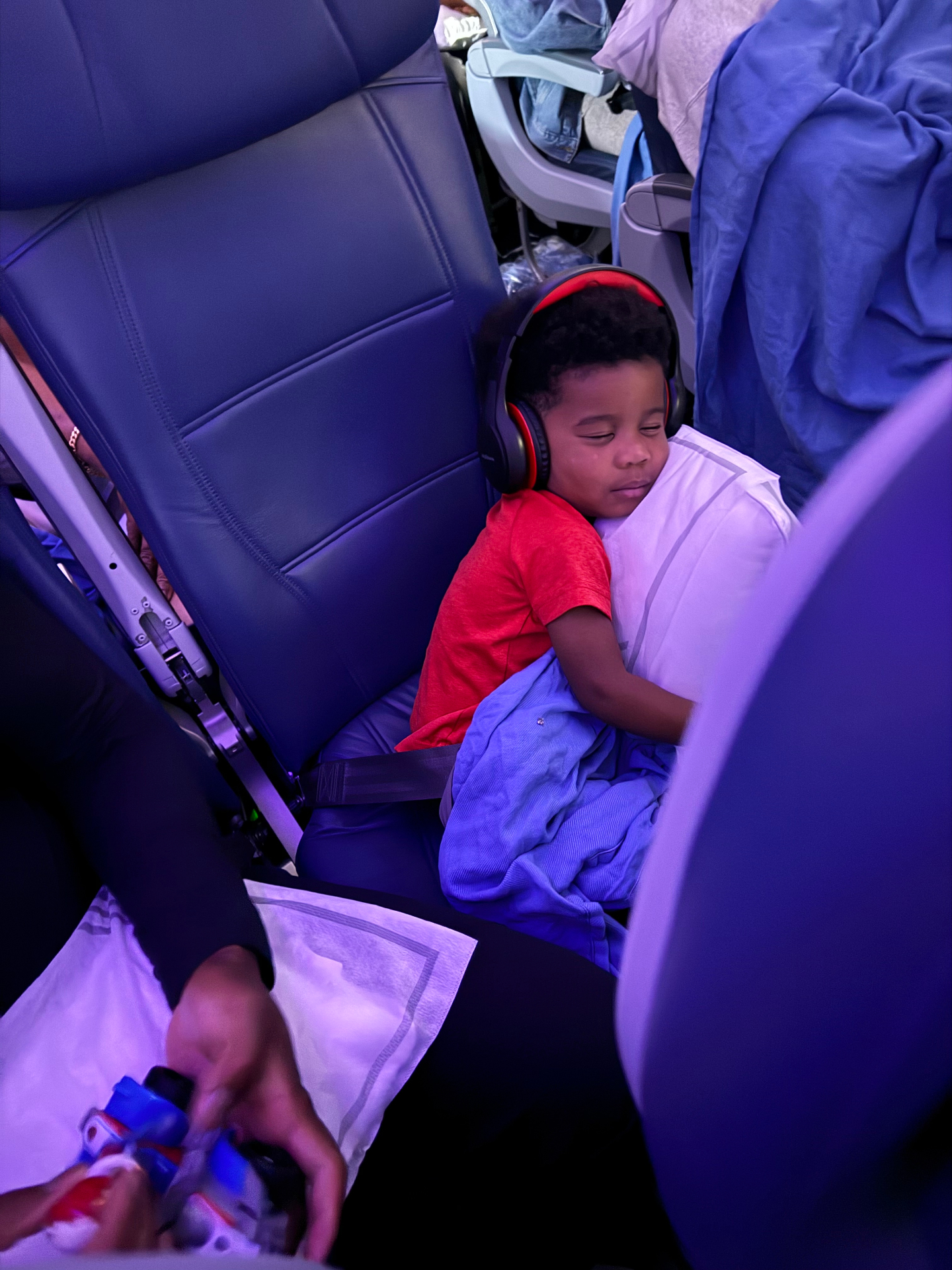
A child wearing headphones rests against a pillow in an airplane seat
II.

Expect the travel day to be hard.

Travel days are designed to test your patience.

Flights get delayed. Security takes longer than expected. Someone cries, someone spills a snack, and someone asks if you're there yet before you've even taken off.

We've stopped expecting travel days to go smoothly. Instead, we remind ourselves that our only job is to get there. Not gracefully. Not perfectly. Just together.

Most importantly, we remember that it's us against the challenge—not us against each other. Children borrow our emotions, and they'll often mirror the energy we bring. When we stay calm, they find their way back to calm too.

A difficult travel day doesn't mean you've made a mistake. It just means you're traveling.

Our only goal on travel day is simple: get there by whatever means necessary.

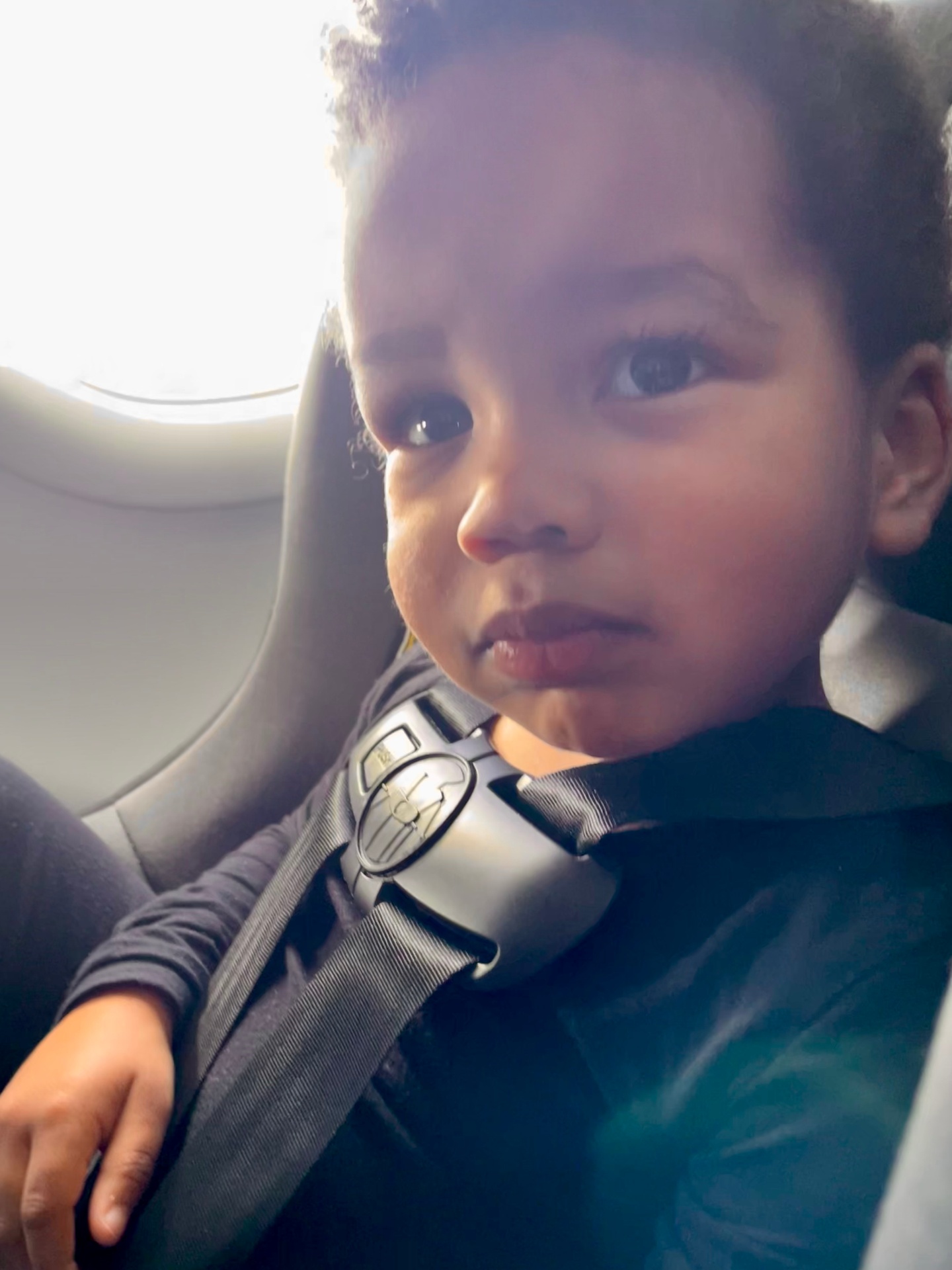
A child sitting in an airplane seat wearing a harness and looking toward the camera
III.

Know how you'll arrive.

The hardest part of a trip is often the first hour after you arrive.

You're tired from traveling. The kids are ready to be out of the stroller or off the plane. You're waiting in an immigration line. You're in an unfamiliar place, sometimes in a language you don't speak, trying to figure out how to get everyone—and everything—to your accommodation.

That's why, after booking where we'll stay, the next thing we plan is how we'll get there.

Will we rent a car? Do we need to bring car seats or can we reserve them? Is there a train from the airport that makes more sense? Thinking through those questions before we leave removes one of the biggest sources of stress on arrival.

Sometimes the transportation plan even helps us choose the destination itself. A place that's easy to reach with young children is often the right place for the season we're in.

We don't plan every moment of our trips. We just make sure to remove uncertainty from this one.

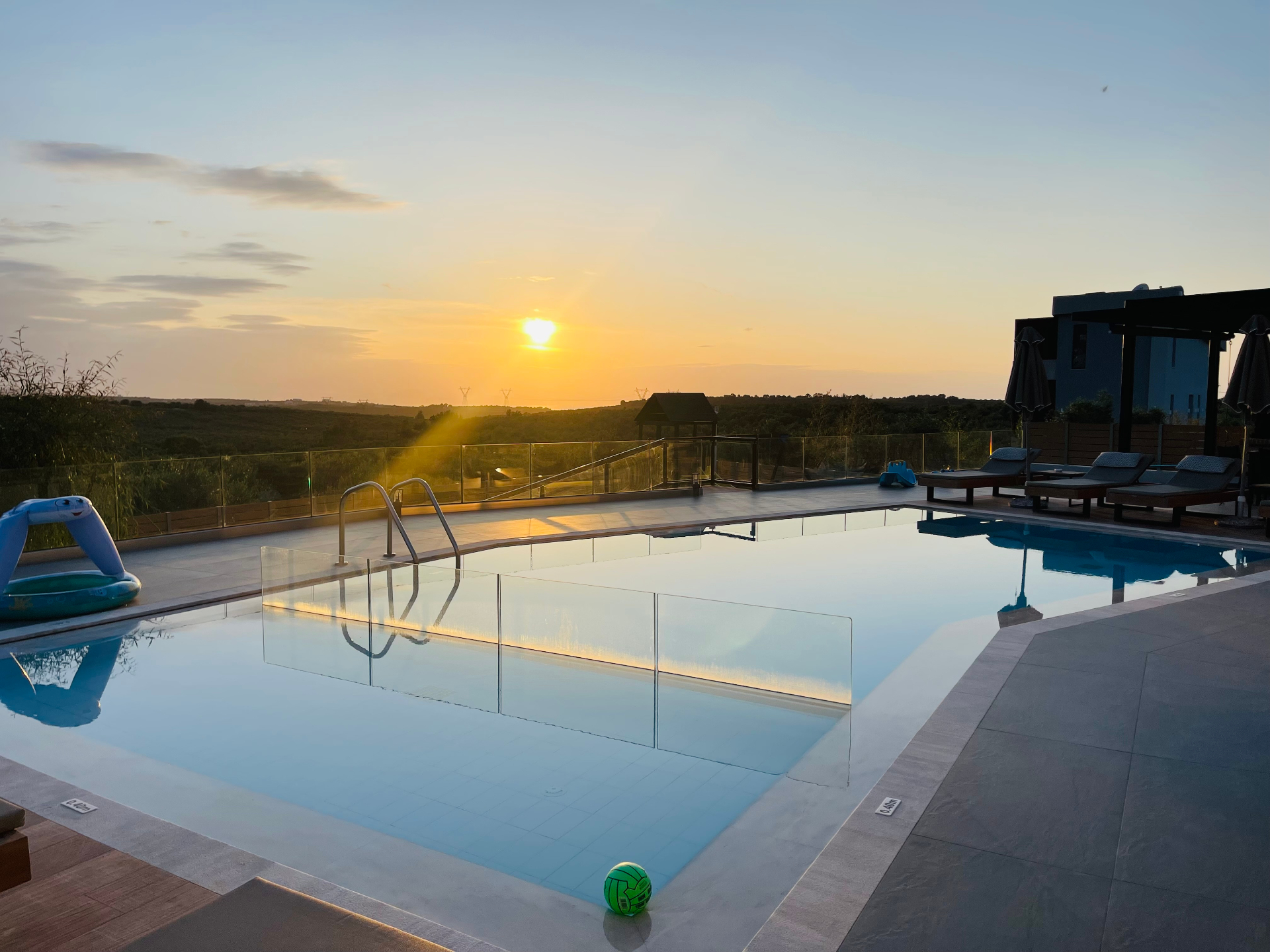
A rooftop infinity pool at sunset with a child's inflatable float and a small green ball
IV.

Choose your stay with intention.

Your accommodation is more than just a place to sleep. It's where you'll begin each morning, end each day, and reset when plans don't go quite as expected.

We've found that the right choice depends on the kind of trip we're taking. For shorter stays, hotels often make life easier. Early check-in, luggage storage, breakfast on-site, and a front desk ready to help can make those first and last days much less stressful.

For longer trips, we usually choose a vacation rental. Having a washing machine, a kitchen, and extra space gives our family the flexibility to settle into a destination instead of simply passing through.

Beyond the listing itself, we think about the little things. Can we walk to a park or grab dinner nearby? Is there a grocery store within easy reach? Is the pool safely enclosed? Are there fragile decorations we'd spend the whole week asking little hands not to touch? Are their kid-friendly amenities at the property?

The best accommodation isn't always the most beautiful. It's the one that quietly makes everything else feel easier.

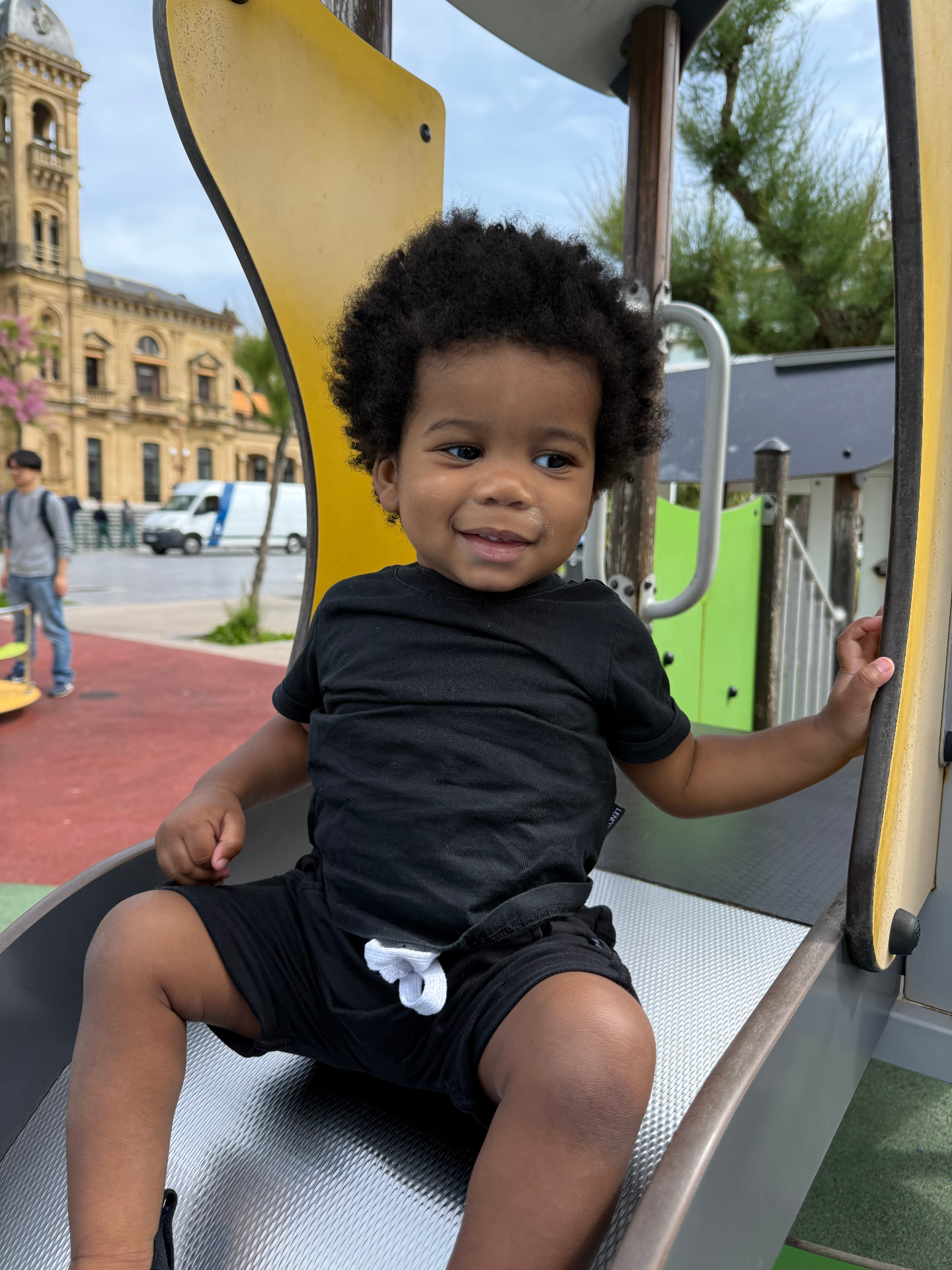
A young child sitting on playground equipment in a European city square
V.

Build a list, not an itinerary. 

Before every trip, we spend hours researching what we'd love to see and do. But we almost never decide exactly when we'll do it.

Instead, we create a list of possibilities and rank them by priority. Most days, we plan for one main activity—usually in the morning, when everyone is rested and the day still feels predictable. If that activity isn't designed for children, we make sure we know where the nearest playground is located to reset. Everyone deserves a chance to enjoy the day.

Each evening, we look at our list again and ask a simple question: What feels right for tomorrow? The answer changes depending on the weather, our energy, and how everyone is feeling.

We rarely book activities far in advance because flexibility is one of the greatest luxuries of family travel. We'd rather miss an attraction than spend a day forcing an experience no one is enjoying.

You don't have to see everything to have an unforgettable trip. 

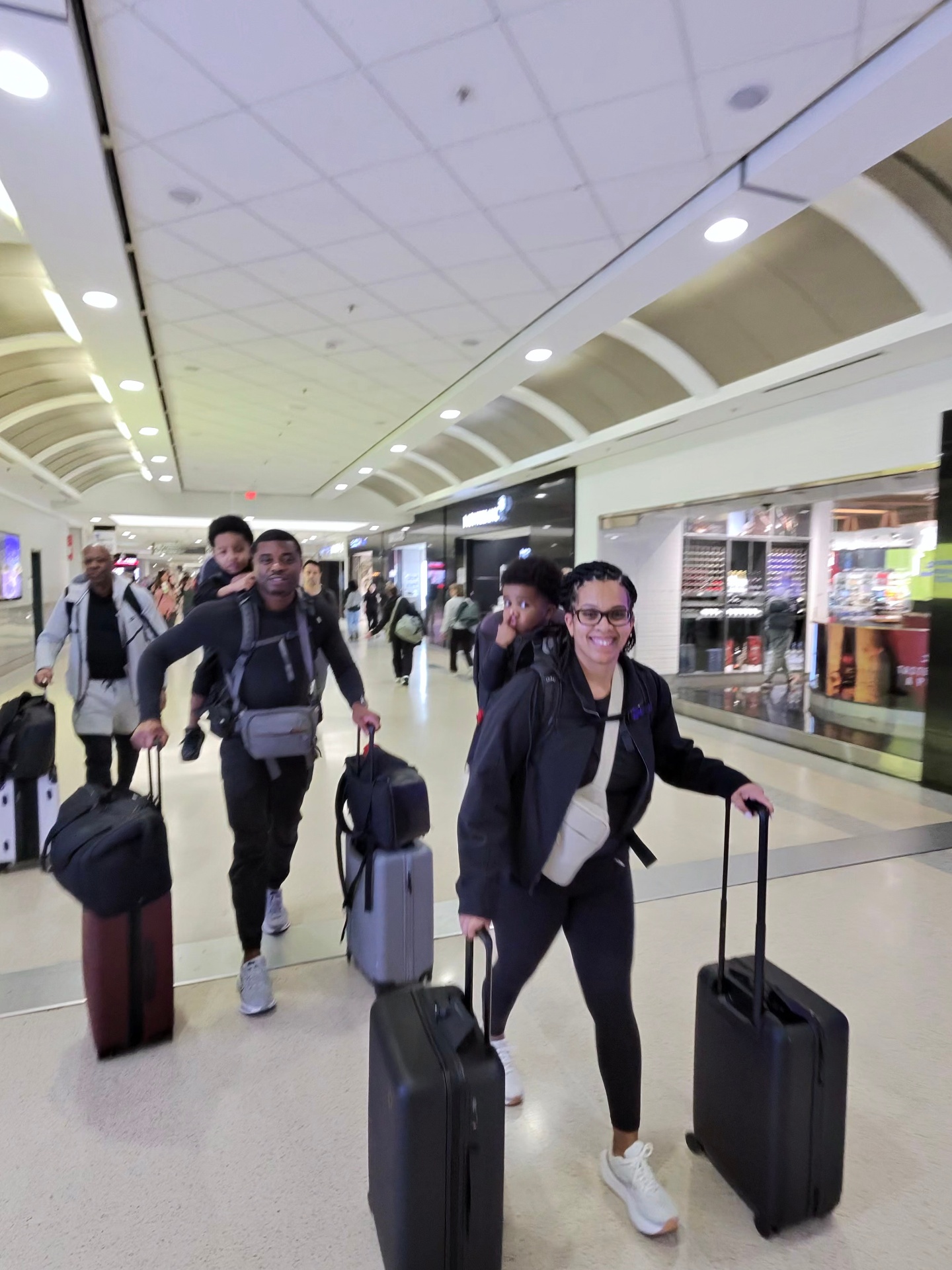
A family walking through an airport terminal with rolling suitcases and children riding on their parents' shoulders
VI.

Pack for the trip, not every possibility.

Our goal isn't to prepare for every possible scenario—it's to pack for the trip we're actually taking. If we're traveling for ten days, we usually pack enough clothes for about five and plan to do laundry along the way. If our children need diapers, wipes, or snacks, we bring enough for the first day or two and buy the rest once we arrive. If babies live there, those essentials do too.

Each of our boys gets to bring their iPad, one special toy, and we pack one or two books for bedtime. Beyond that, we keep it simple. We're not trying to coordinate perfectly curated outfits or fill a suitcase "just in case."

Every extra bag has to be carried through airports, lifted onto trains, rolled over cobblestone streets, and hauled up flights of stairs—often while carrying a tired child at the same time.

Packing thoughtfully doesn't always mean traveling with only a carry-on. It simply means bringing what serves your family and leaving behind what doesn't. The lighter you travel, the easier it is to enjoy the journey.

A closing note

Confidence is not a list. It is the quiet decision to go. It won't be perfect but it will be worth it.