Finding a Playground, Anywhere
Our favorite tricks for finding great playgrounds when your kids need to run, reset, and just be kids.
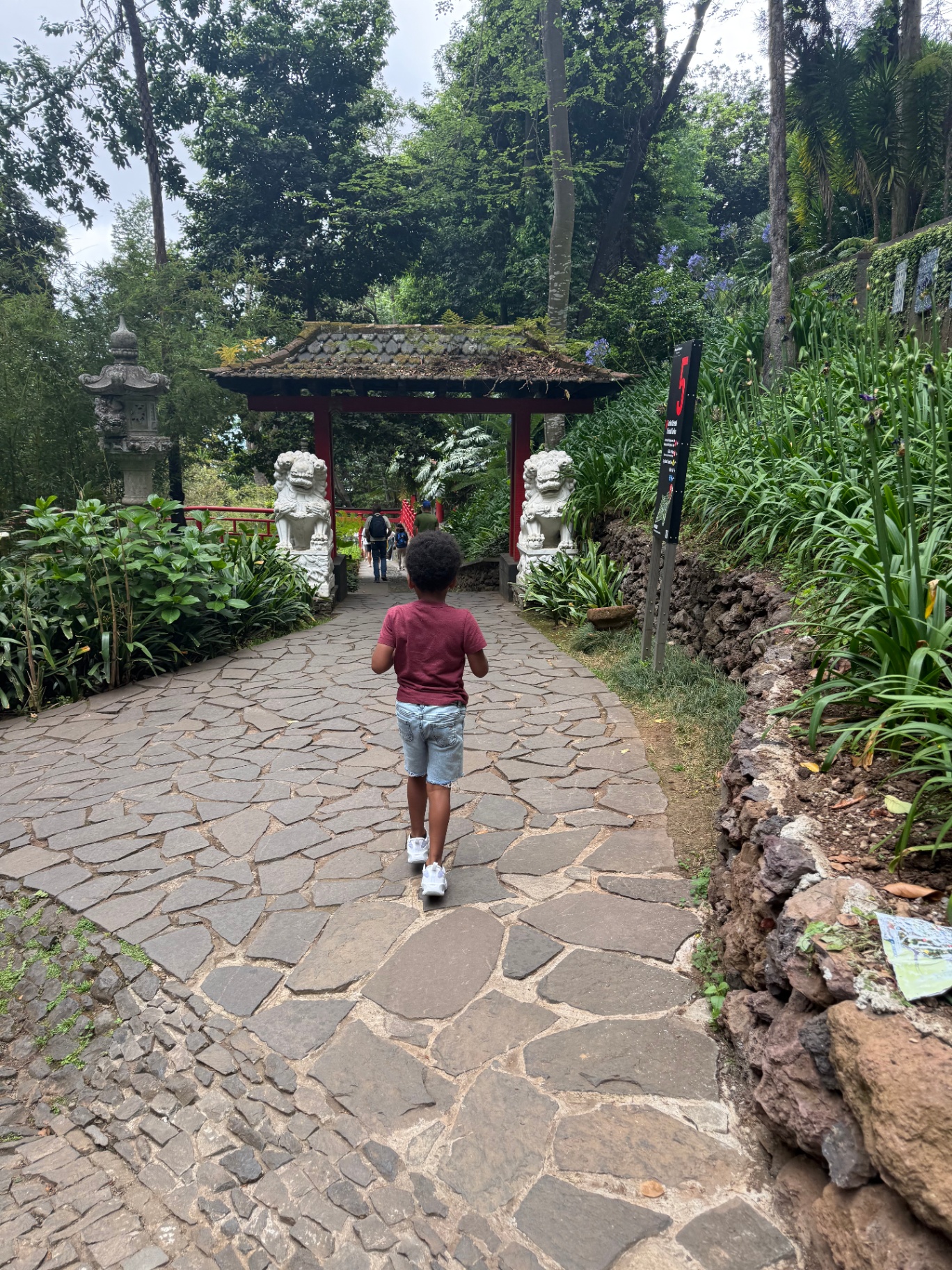
There's a quiet assumption that traveling with young kids means doing only kid things. Children's museums, aquariums, the hotel pool, repeat. And we love plenty of that; we visit children's museums all over the world. But we've never been willing to build an entire trip around only what a four-year-old would pick, because then we'd never sit in a square with a glass of wine, or try the restaurant we came all this way for, or wander a new city until it starts to make sense. So we found a way to do both.
The trick is almost embarrassingly simple: we always know where the nearest playground is.
Our version of the grown-up world is pretty low-key, which helps. We're not really museum-or-church people; we would rather admire a cathedral from a bench across the square than wait in line to walk through it. We look, we browse, we keep moving. We try the restaurant we've been reading about, we sit with a glass of wine and watch a place go by, we walk until our feet hurt. Which, conveniently, is exactly the kind of thing you can step away from the second a two-year-old has had enough.
Before every trip, while we're building our list of things to see and do, we add one small step. For every grown-up stop on the list — the restaurant we want to try, the square where we'll linger over a glass of wine, the neighborhood we want to wander — we look up the closest playground and write it down. We use the Playground Buddy app alongside Google and Apple Maps, and in our trip notes, every activity has a playground sitting right next to it. The restaurant we booked, and the park around the corner. The square with the good wine, and the swings down the road.
Here's what that changes. The meltdown is coming. With two little ones and a full day out, it isn't a question of if but when. And the difference between a rough afternoon and a fine one is almost never whether the meltdown happens. It's whether you already know where to go when it does. When the escape valve is mapped before we leave the hotel, a fussy twenty minutes becomes "let's go find the swings" instead of a frantic search on a phone with one bar while somebody cries in a stroller.
There's a quieter benefit, too. Knowing the release valve is there changes how we move through the whole day. We're calmer, less braced for disaster, more willing to linger somewhere beautiful, because we're never more than a few minutes from a spot where the boys can just be kids. Preparation is what buys us the patience to enjoy the grown-up part.
We do the same thing with carousels, which have rescued more afternoons than I can count. Europe, where we've traveled the most, is full of them, tucked into squares and parks alongside some of the best playgrounds we've found anywhere. A carousel is a five-minute reset that lands like a treat, and knowing where the nearest one is turns "we should probably head back" into "one more stop, then ice cream."
None of this requires choosing between the trip you want and the trip your kids can handle. It just requires knowing, ahead of time, where the exits are. That small bit of homework is exactly what lets us take our boys into the grown-up world, the good restaurants and old squares and long, unhurried afternoons of just wandering, instead of waiting until they're older to go. We're not avoiding those places. We've just mapped the escape valve, so we can actually enjoy them.
- as you build your list of things to do, open Playground Buddy alongside Google or Apple Maps
- for every adult-centered stop, jot down the nearest playground or carousel
- keep it in the same notes as your itinerary, so the escape valve is always one glance away