Give Your Toddler a Job
Why we give our boys a real role on every trip—from helping plan it to leading the way once we're there.
Somewhere along the way we noticed a pattern: a toddler who feels like cargo tends to act like cargo. Strapped in, hauled around, moved from one line to the next with no say in any of it, of course he pushes back. So we tried the opposite. We started giving our boys a real job to do, and it has quietly become one of the best tools we have, both for cooperation in the moment and for the kind of kids we are trying to raise.
It starts before we ever leave home. We bring the boys into the planning. We show them where we are going, pull up pictures and maps, and let them ask all the questions they want. Then we walk through the unfamiliar parts out loud, the parts that can rattle a little kid precisely because they are new. What the airport will be like. What happens at security. How long the plane ride is and what we will expect of them while we are on it. A new experience is a great deal less frightening once it has been talked through in advance. Half of a toddler's travel-day anxiety is really just fear of the unknown, and you can shrink that fear simply by making it known.
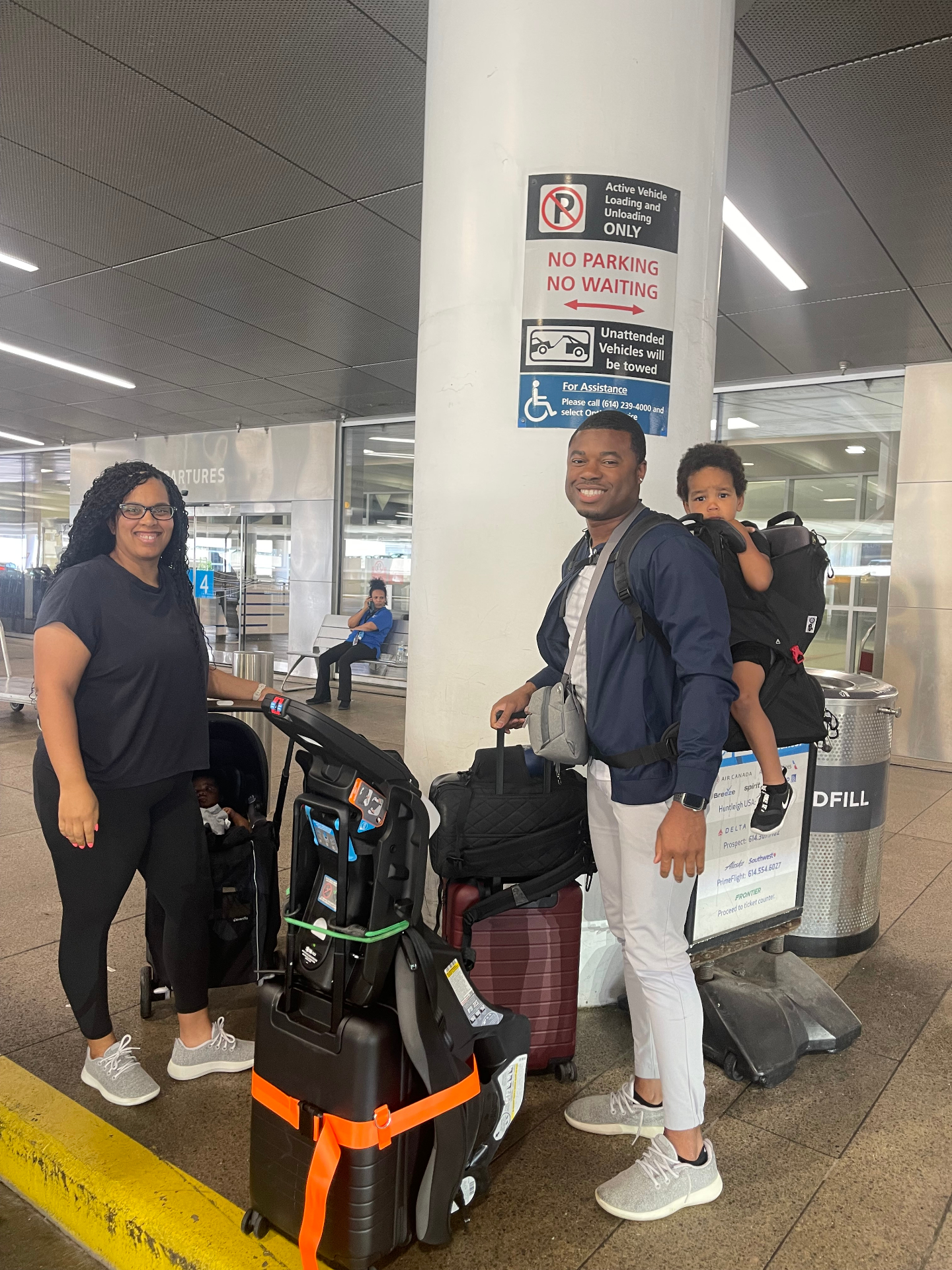
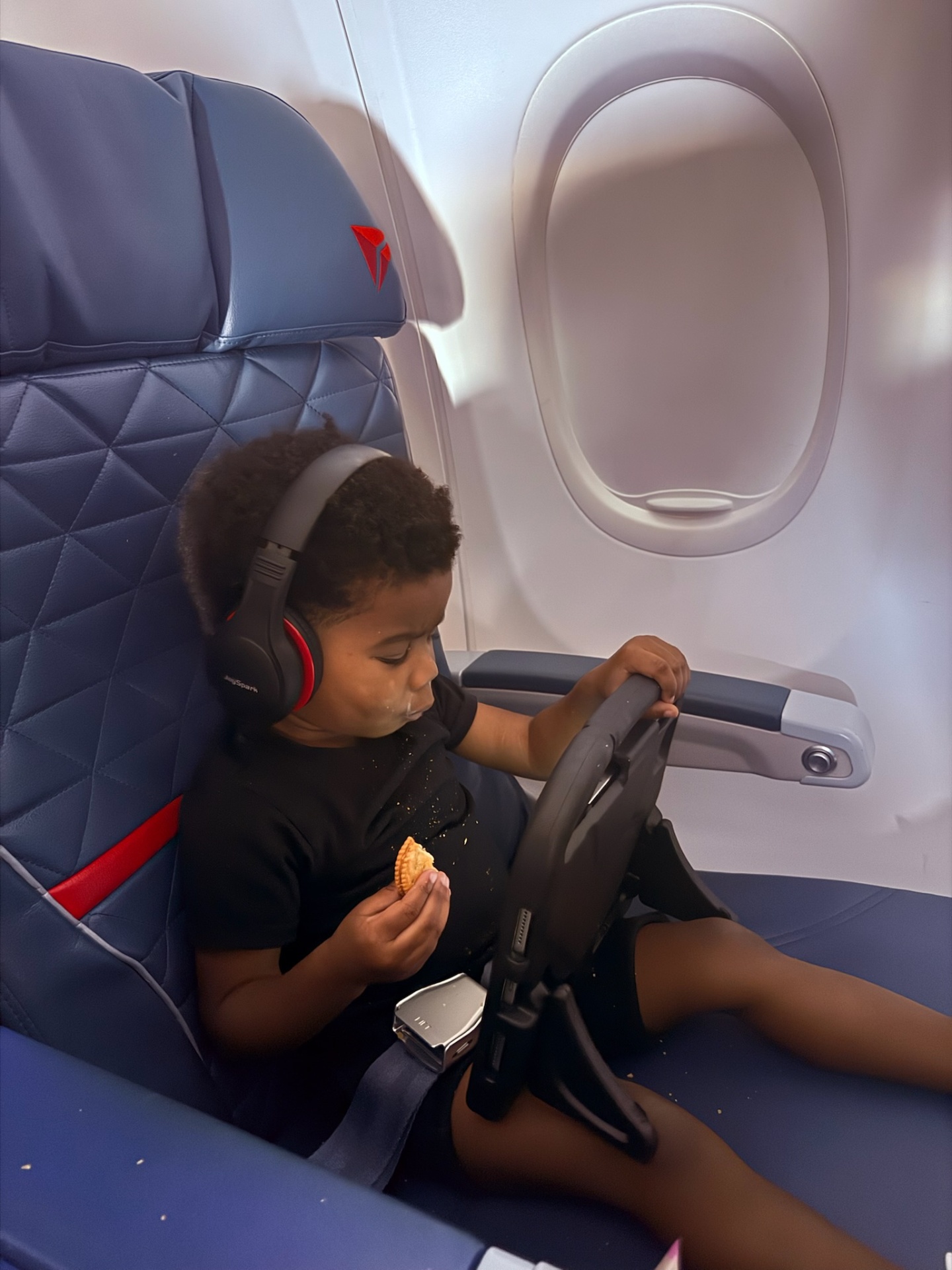
Then we get to the airport, which turns out to be one giant, free learning worksheet. Everywhere you look there are numbers and letters and signs, which means everywhere you look there is a job. We put the boys to work. Preston now finds our gate with a little help, reading the numbers off the boards, and once we are on the plane he can find his own row with almost none. It keeps him busy through the parts of travel that are mostly waiting, it sneaks in letters and numbers without ever feeling like practice, and, not incidentally, a kid with a task is a kid who is not melting down. The job is as much a gift to us as it is to him.
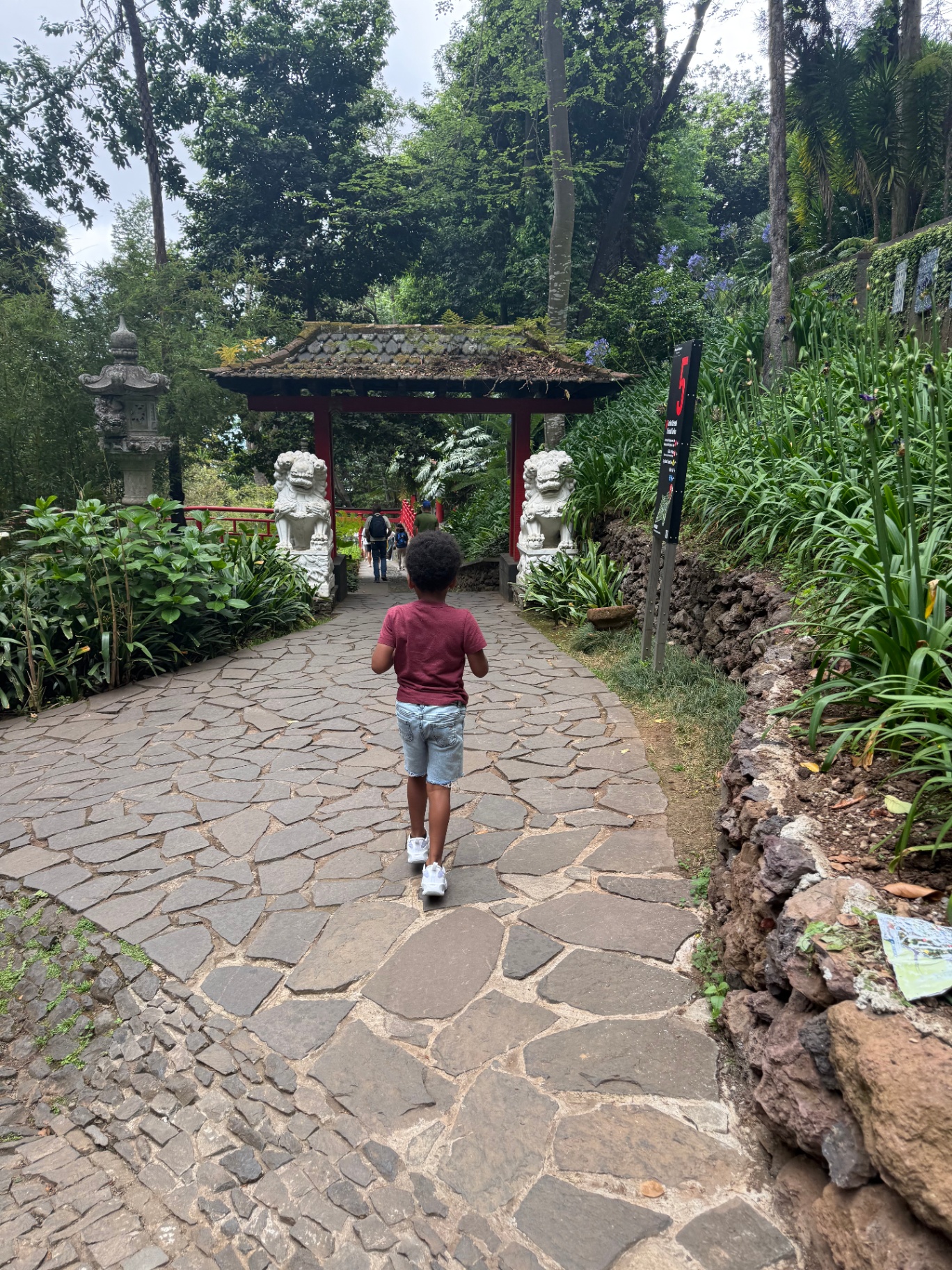
The best version, though, happens once we arrive: we let them navigate and lead. We hand over the map and let them choose which way to go. This past June, wandering a botanical garden in Madeira, Portugal, someone handed Preston a map, and from that moment all he wanted was to be the lead explorer. It would have been so easy to take the map back and steer, the way your instincts tell you to. But here is what we had to remind ourselves: it did not matter in the slightest whether we turned left or right. We were not trying to get anywhere. We were there to wander, and so we let a small boy lead his parents through a garden, and he walked a little taller the whole way, because for once he was the one in charge.
That, in the end, is the whole point, and it has almost nothing to do with efficiency. A child who is trusted with a real job on the road learns something you cannot teach him from a car seat: that he is capable, that a new place is his to navigate rather than simply endure, that he belongs in the wide world and can help move his family through it. Handing over a little control costs us almost nothing. What it gives him, that quiet, upright feeling of being useful and important, is a great deal of what we came out here hoping to build.
So give your toddler a job. Let them help plan, let them find the gate, let them hold the map. You may get where you are going a few minutes slower. But you will get there with a kid who feels like an explorer instead of a passenger, and that is not a close trade.
- before the trip, let them help plan and talk through exactly what to expect
- at the airport, put them on gate-and-row duty, letters and numbers for free
- at the destination, hand over the map and let them lead
- and whenever it doesn't matter which way you turn, let them choose