Block Guides
Positano
Exploring Positano with our 19-month-old.
From a cliffside villa and rocky beach clubs to ferries, crowded streets and a quiet soccer game in Ravello, Positano gave us the iconic view we had imagined — and a clearer understanding of the places in which our family travels best.
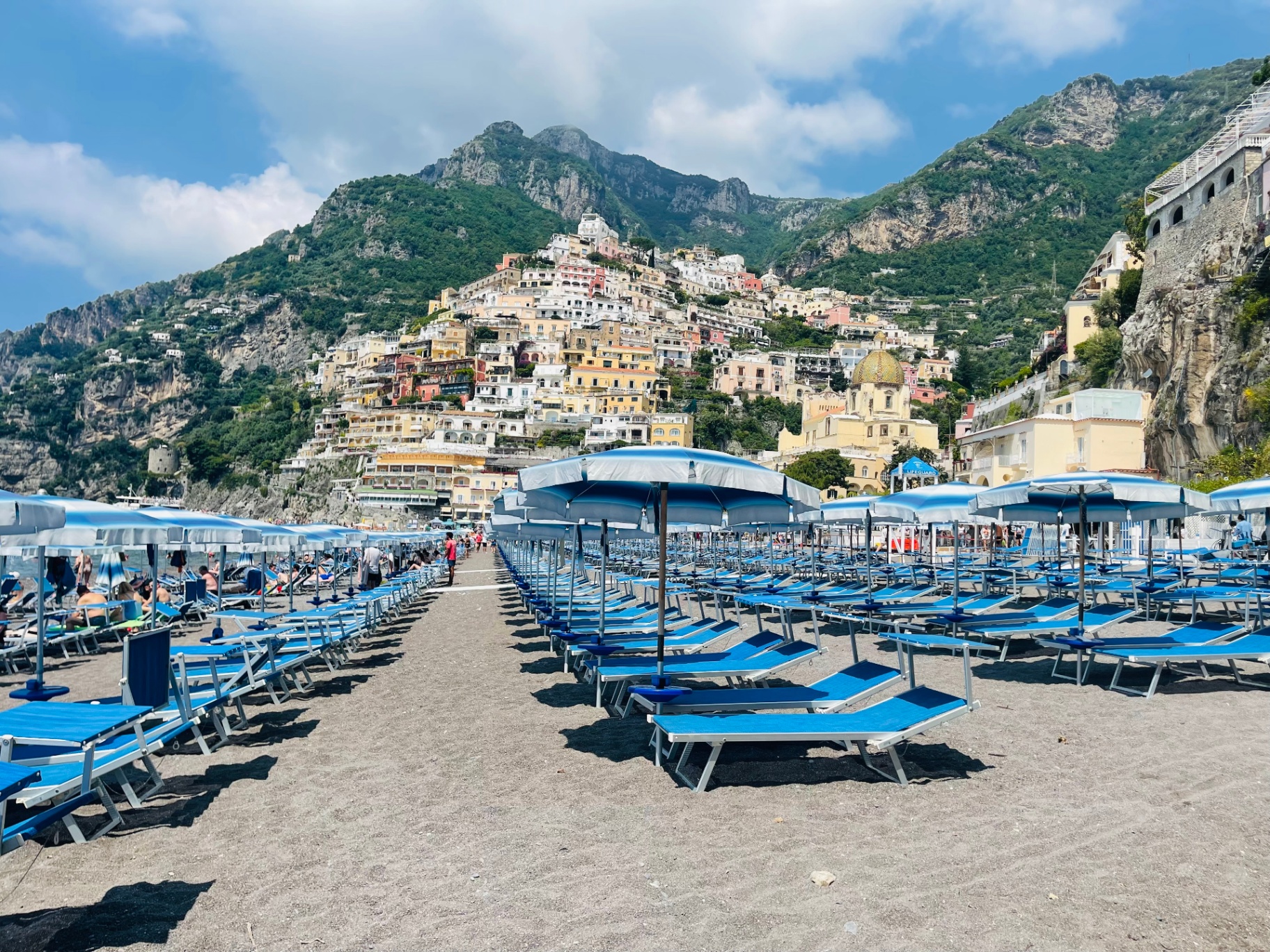
The Postcard Was Real — and So Were the Stairs
Positano was not an accidental stop on our first European itinerary. It was one of the places we believed would define it.
We had seen the Amalfi Coast in movies, heard it referenced in music and watched its colorful cliffside appear across Instagram and YouTube. After Santorini and Crete, we expected Positano to deliver the kind of glitz and glamour we assumed we loved.
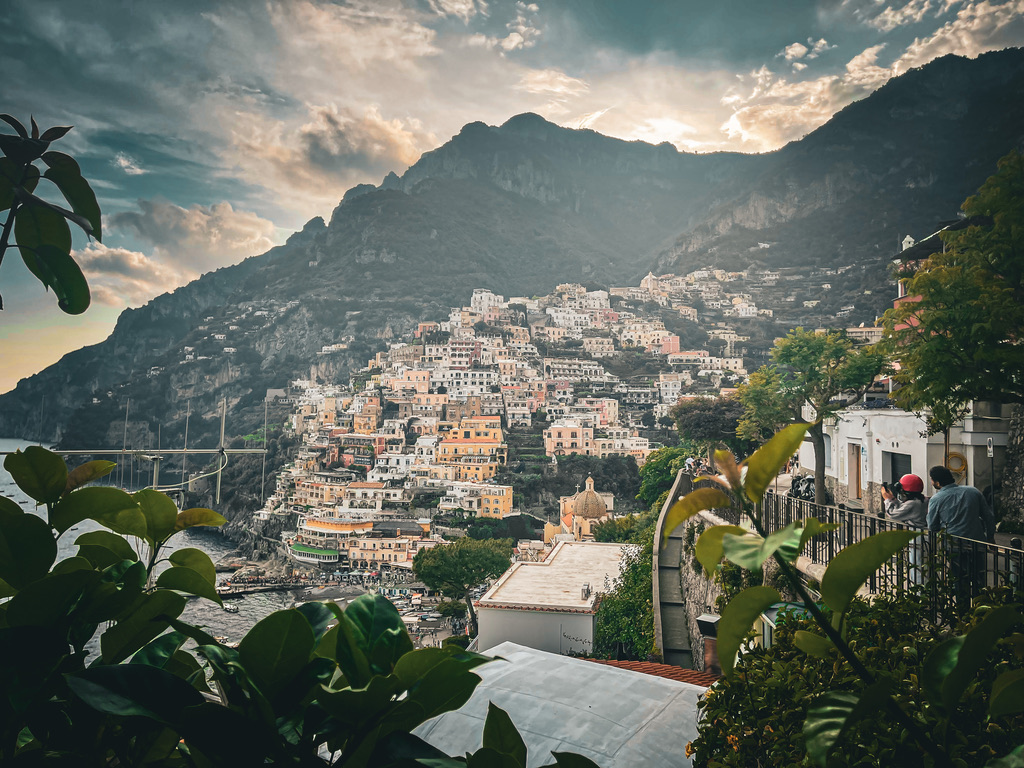
It did. The first complete view of the town looked almost unreal: pastel buildings stacked into the mountain, deep blue water below and a coastline unlike anything we had seen at home. Positano was one of the prettiest places we had visited.
It was also the stop that confirmed something Santorini had begun to reveal. We could appreciate a famous destination, be genuinely grateful to experience it and still recognize that it was not the place where our family felt most at ease. The beauty came with steep roads, hundreds of stairs, shoulder-to-shoulder crowds and very few safe places for a toddler to move independently. We spent much of the trip carrying Preston, planning every return to the villa and staying alert beside traffic, cliff edges and ferry docks.
Then we took a day trip to Ravello. The air was cooler, the town was quieter and a group of older boys invited Preston into their soccer game. That simple moment became the memory we valued most. It also clarified what our family was beginning to seek when we traveled: not only a view worth seeing, but enough space for our son to enter the story himself.
Our Route
Positano was the third stop of a two-week European trip that ran Santorini → Crete → Positano → Rome. We flew from Chania to Naples, then hired a private driver for the winding coastal road into Positano, where we based for four nights before taking the train from Naples on to Rome.
Before We Left
Why We Chose Positano
We chose Positano for many of the same reasons we chose Santorini. It was recognizable, celebrated and visually dramatic. We thought we liked destinations that felt big and splashy, and the Amalfi Coast seemed to promise exactly that.
We were also aware that Positano could be difficult with a toddler. Nearly every planning discussion mentioned hills, stairs and the importance of choosing accommodations carefully. We researched location more closely than we might have for a flatter city and selected a rental in the central portion of the mountainside.
What We Planned — and What We Left Open
Before leaving home, we reserved the Ryanair flight, our Positano apartment and private transportation from Naples. Hiring a driver was a deliberate choice. We generally prefer to rent a car, but the descriptions of Amalfi Coast traffic and roads persuaded us not to drive.
The daily schedule remained loose. We carried a list that included Fornillo Beach, Capri, Amalfi, Ravello and Arienzo Beach Club, then decided what felt manageable once we arrived. Arienzo required more advance coordination, including its private boat transfer, and we ran out of time. Because we did not visit, it is not included as a firsthand recommendation.
Arriving in Positano
Our travel day began with a 6:15 a.m. Ryanair flight from Chania to Naples. The flight was nonstop, but the airline's baggage rules required more attention than we were accustomed to in the United States. Although our luggage had functioned as carry-on baggage during other parts of the trip, it did not meet the dimensions permitted for the Ryanair cabin allowance. Luckily, we had researched this in advance, purchased a checked luggage allowance and were able to avoid additional fees.
A prearranged driver met us in Naples. The airport traffic felt chaotic before we even reached the coast. Then the roads became steeper, narrower and more winding, with long tunnels, cliffside turns and heavy traffic moving through very little space. I became carsick in the back seat and spent much of the ride resting with my eyes closed. Kyle remembers the cliffs, the tunnels and each turn. We both left the drive completely certain that hiring someone had been the right decision. This remains one of the few destinations where we would not voluntarily drive ourselves.
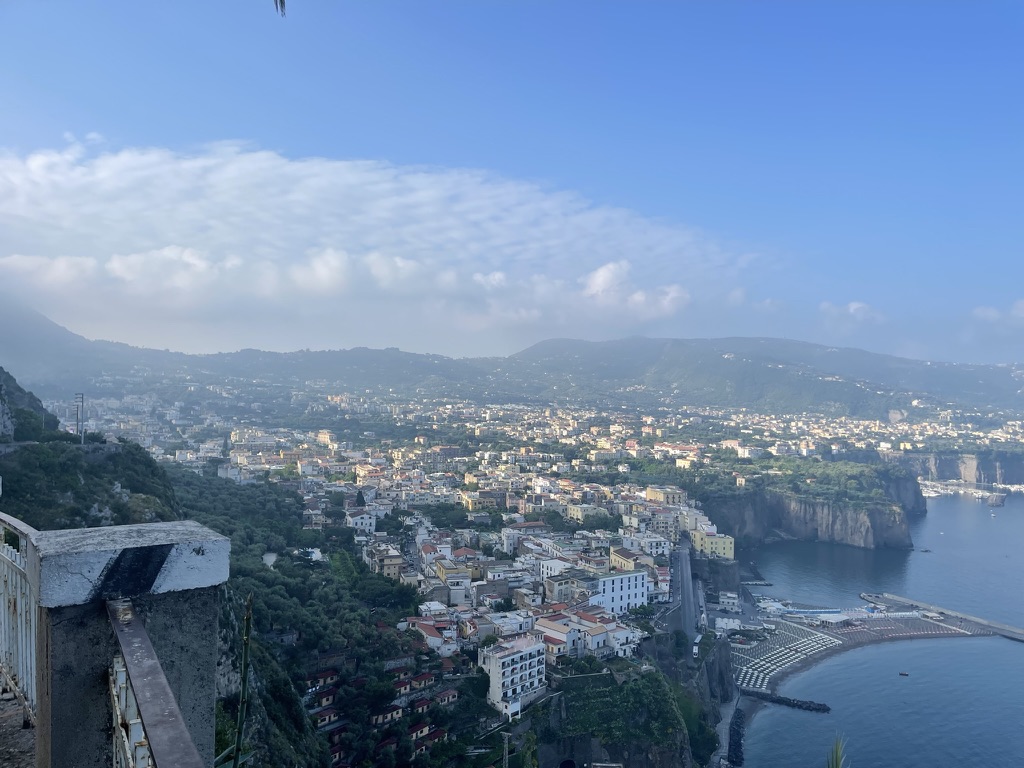
We arrived well before the apartment's three- or four-o'clock check-in time. Our host had arranged for a porter to collect and store our luggage, but our driver left us beside the road and no one was at the collection point to gather our belongings. We could not see an obvious luggage office, could not immediately reach the host and could not realistically carry the bags around a town built into a mountain.
Eventually, someone arrived by vehicle, collected the luggage and promised it would be delivered. We watched the bags disappear and hoped they would be waiting later. With our hands free, we found a restaurant on a middle tier of the hillside, ordered pizza and pasta on the patio and let the family recover from the early flight and winding drive. We walked for a while before making our way to the apartment. The luggage was there when we arrived.
Making Positano Our Home Base
La Perla di Chicca – De Vivo Realty sat in a central section of Positano's mountainside. The apartment required a climb from street level, but the number of steps was still more manageable than many properties we had considered. The two-level layout included a small kitchen and bathroom on the entry floor, along with a living area, pullout sofa and balcony. A loft above held the primary sleeping space. We tried moving Preston between available sleeping arrangements, but he ultimately slept with us.
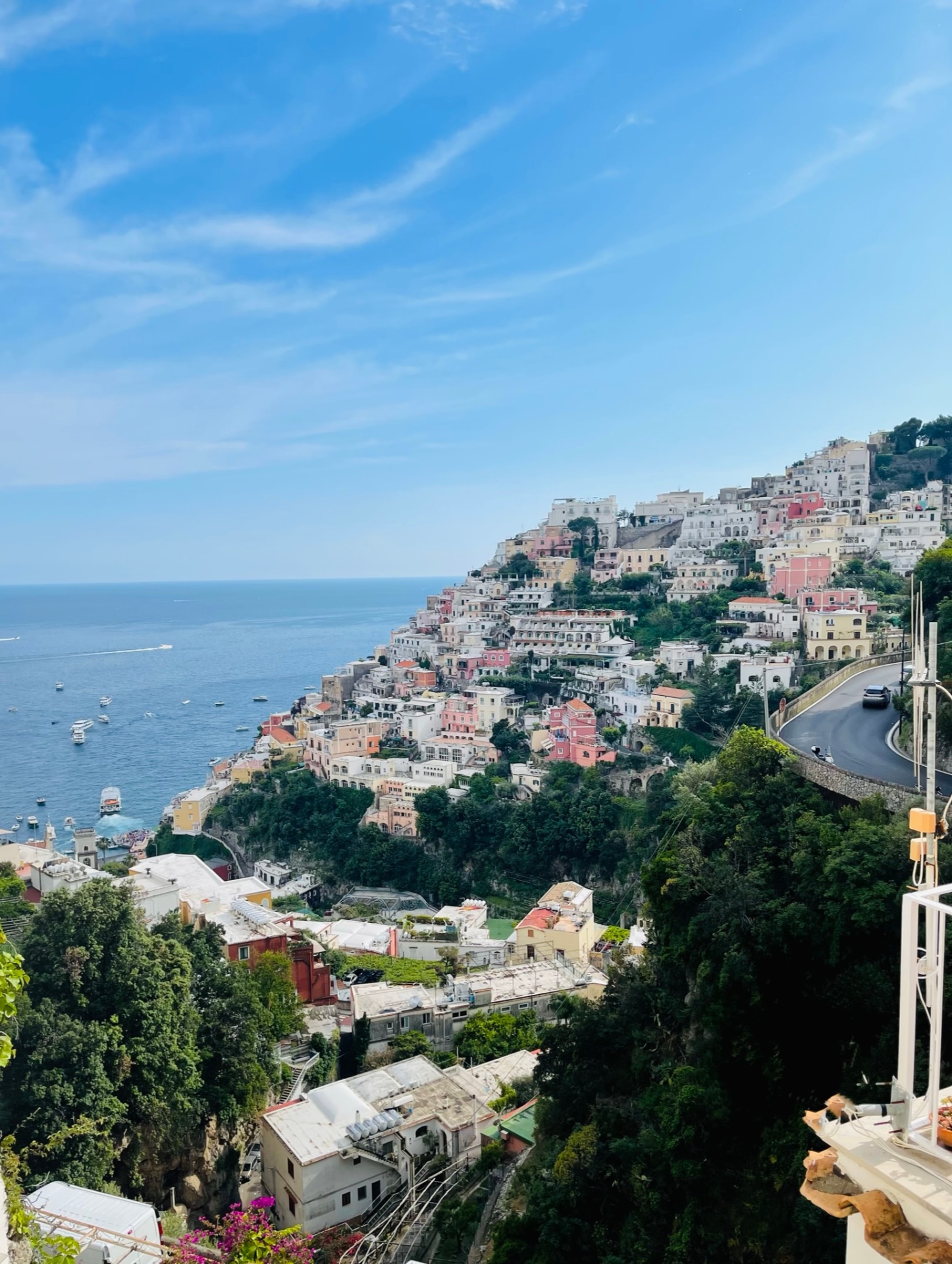
The apartment was smaller than our previous stays, which was not surprising in Positano. It gave us enough room to function, but not much separation. We kept snacks in the kitchen rather than cooking meals. A washing machine in the bathroom was useful during a longer trip; like several places we stayed in Europe, the apartment had no dryer, so we hung clothing inside or outside to dry.
The memorable feature was the view. From the balcony and windows, we looked directly across the inlet toward the cliffside buildings. The apartment itself was fine: functional, adequately located and suitable for our needs. We would not offer it as an enthusiastic personal recommendation — largely due to the luggage mishap and communication — but its location strategy was sound.
Moving Through Positano
Positano is not a destination where leaving the apartment can be treated casually.
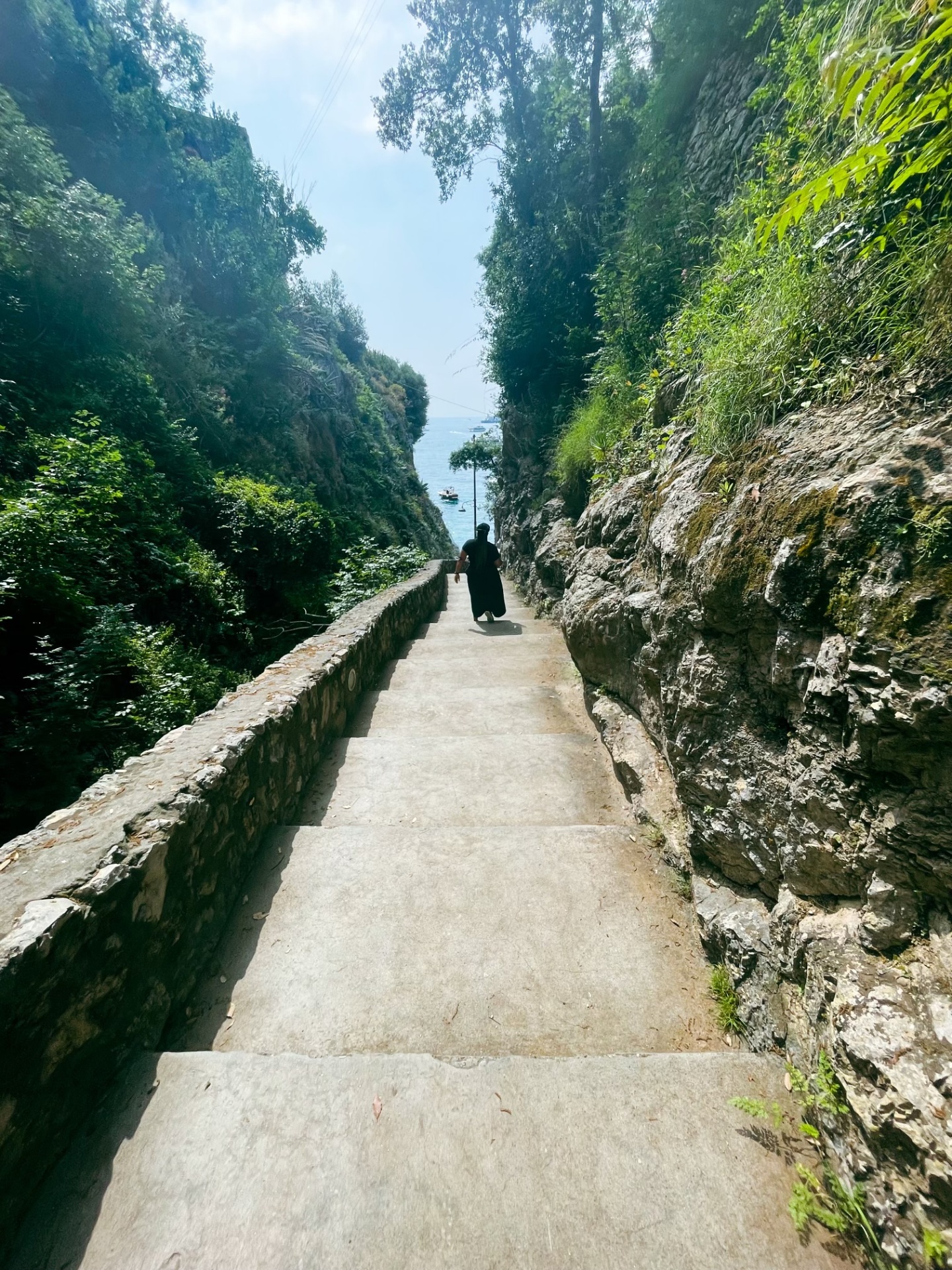
On some days, we recorded approximately 20,000 steps — roughly eight miles — and much of that movement involved stairs or elevation. We did not use a stroller. We do not believe it would have been practical for the routes we traveled. The Osprey Poco hiking carrier became our primary way of moving Preston through staircases, uneven paths, narrow roads and ferry areas.
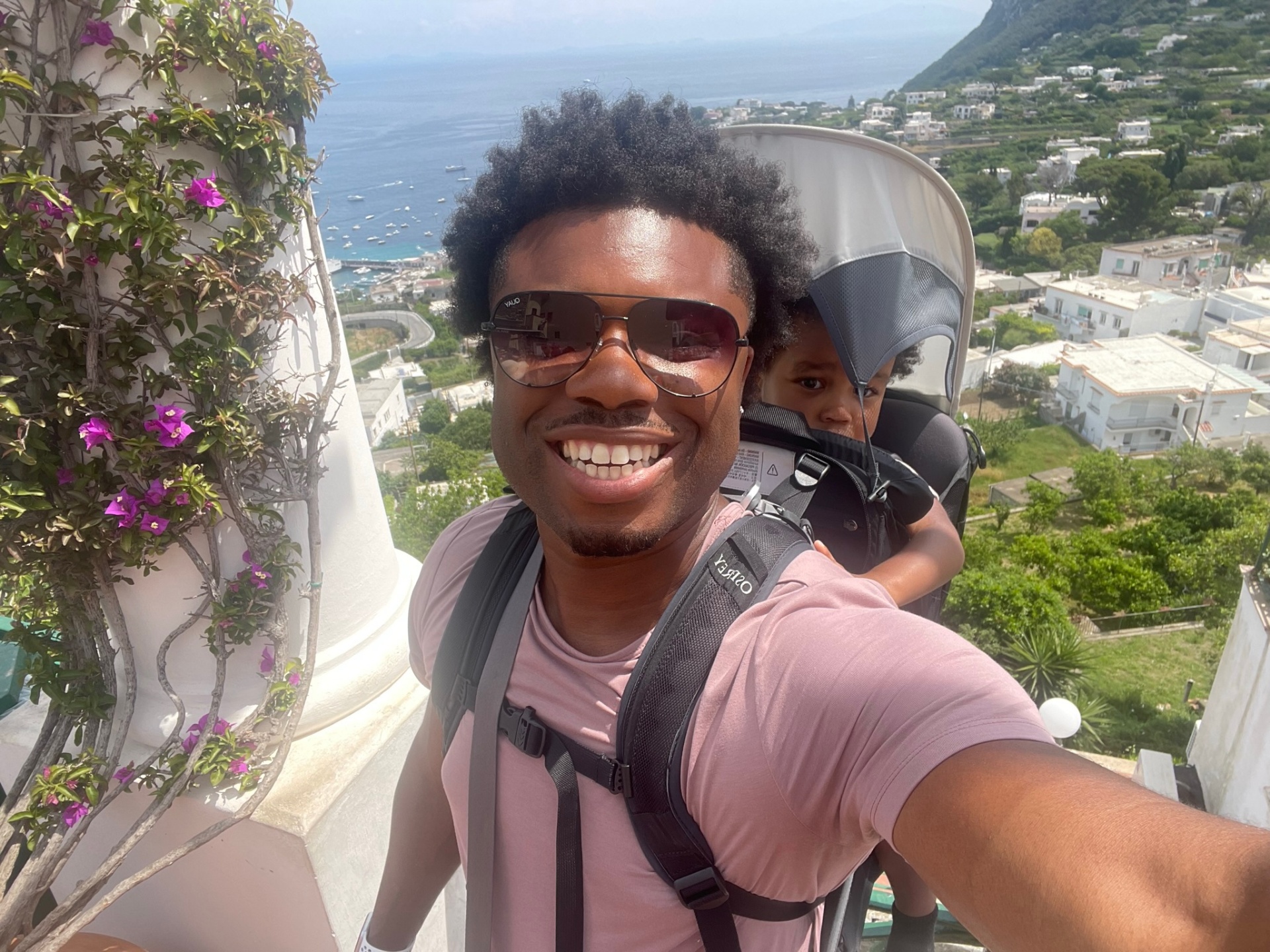
We became very intentional about how often we returned to the apartment. When we left in the morning, we packed everything we expected to need through early or midafternoon. We returned once for Preston to nap and for all of us to reset, then gathered everything required for dinner before leaving again. That rhythm protected our energy. A forgotten snack or extra change of clothing could otherwise require hundreds more stairs. In Positano, planning ahead was less about controlling the day and more about reducing unnecessary movement.
Much of the town required Preston to remain in the carrier. When he needed room to move, we returned to a flat square near the main beach. It was one of the few lower areas without cars where he could safely run and get his wiggles out. Walking beside the road could be nerve-racking — portions had minimal sidewalk, and pedestrians shared narrow space with traffic. We were also continually aware that we were walking, eating and sleeping on the side of a mountain. Positano did not feel unsafe in the conventional sense, but it required sustained attention.
Fornillo Beach
Fornillo Beach gave us a quieter alternative to the postcard-famous main beach. Reaching it required crossing a small bridge and descending along the mountainside, but the beach felt slightly removed from Positano's busiest pedestrian flow.
We did not reserve in advance. When we arrived, staff showed us a seating chart and we selected an available position. During our 2023 visit, the price varied according to how close the chairs were to the water and whether they sat in a more central location. We ate at the club, walked into the clear water and played with Preston for several hours before returning to the apartment for a nap and reset. Water shoes were essential because the beach was rocky rather than sandy.
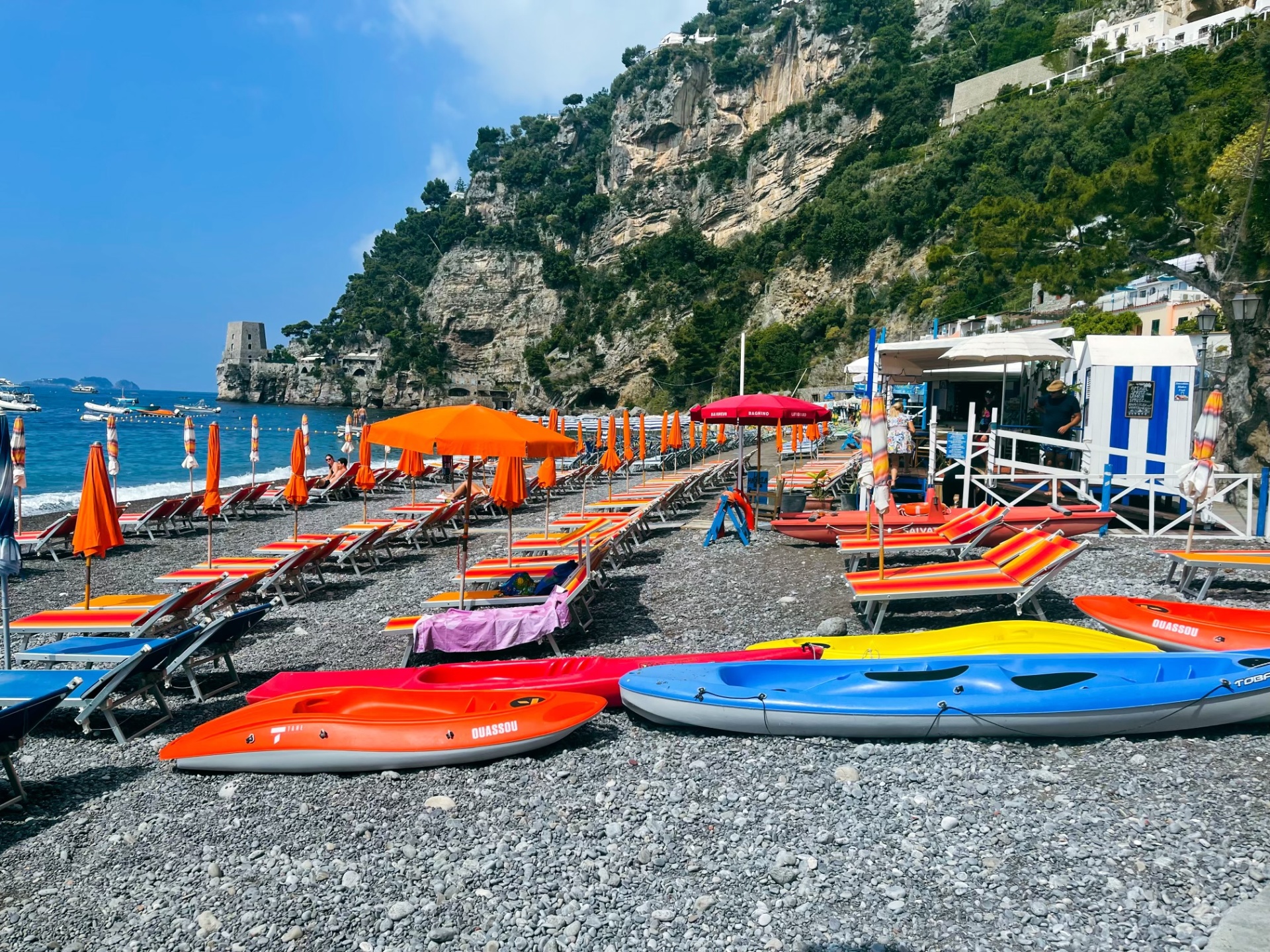
The beach was beautiful. Still, we had just left Crete, where Elafonisi and several other beaches had reset our expectations. Positano offered dramatic cliffs and exceptionally clear water, but its rocky shoreline was not the soft, expansive beach experience we had begun to associate with Greece. That comparison did not make Fornillo a bad beach. It simply reminded us how strongly the previous destination had matched our family. We enjoyed the afternoon, then limited ourselves to one return to the villa so the climb did not overtake the day.
Capri and Anacapri
On June 4, we went to the ferry port as it opened and joined the first few people in line to purchase same-day tickets. We boarded at approximately 10:00 a.m. and returned around 5:30 p.m. The crossing took roughly 30 to 40 minutes.
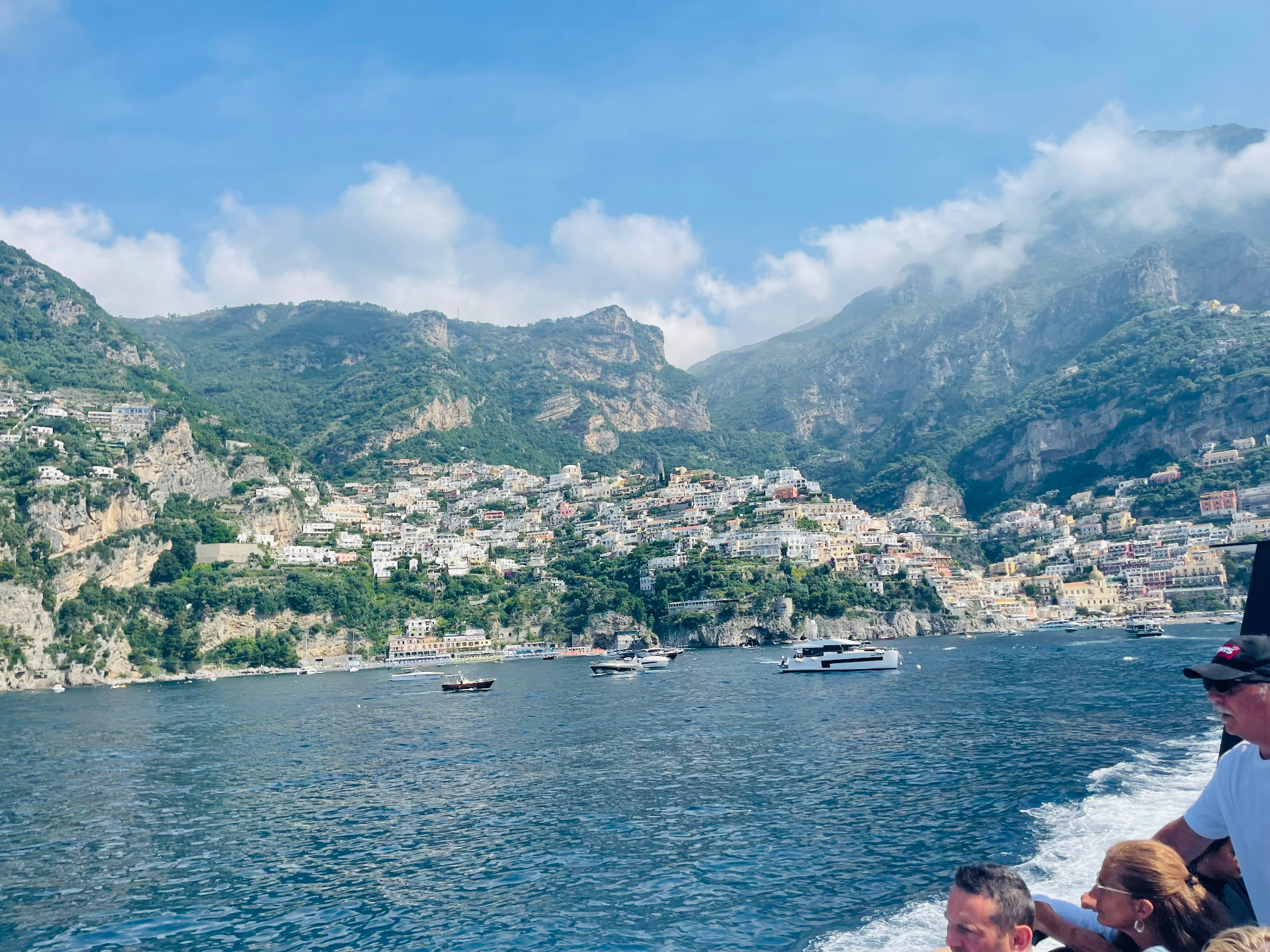
Leaving the port revealed Positano in a way the streets could not. From the water, the entire town came into view at once: the mountainside, the colorful buildings and the dramatic vertical scale. The postcard was real. That view became the image that best captured Positano for us.
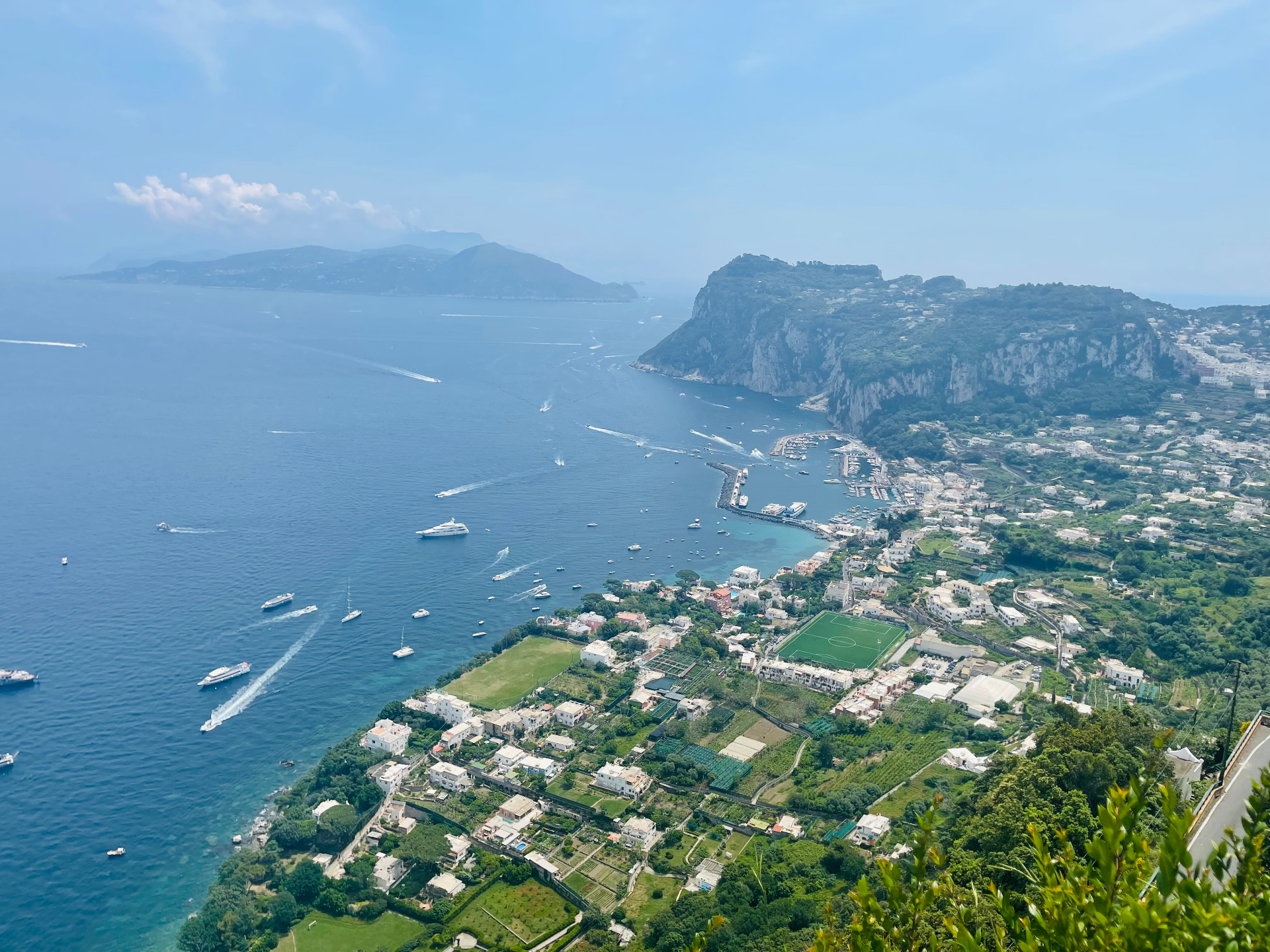
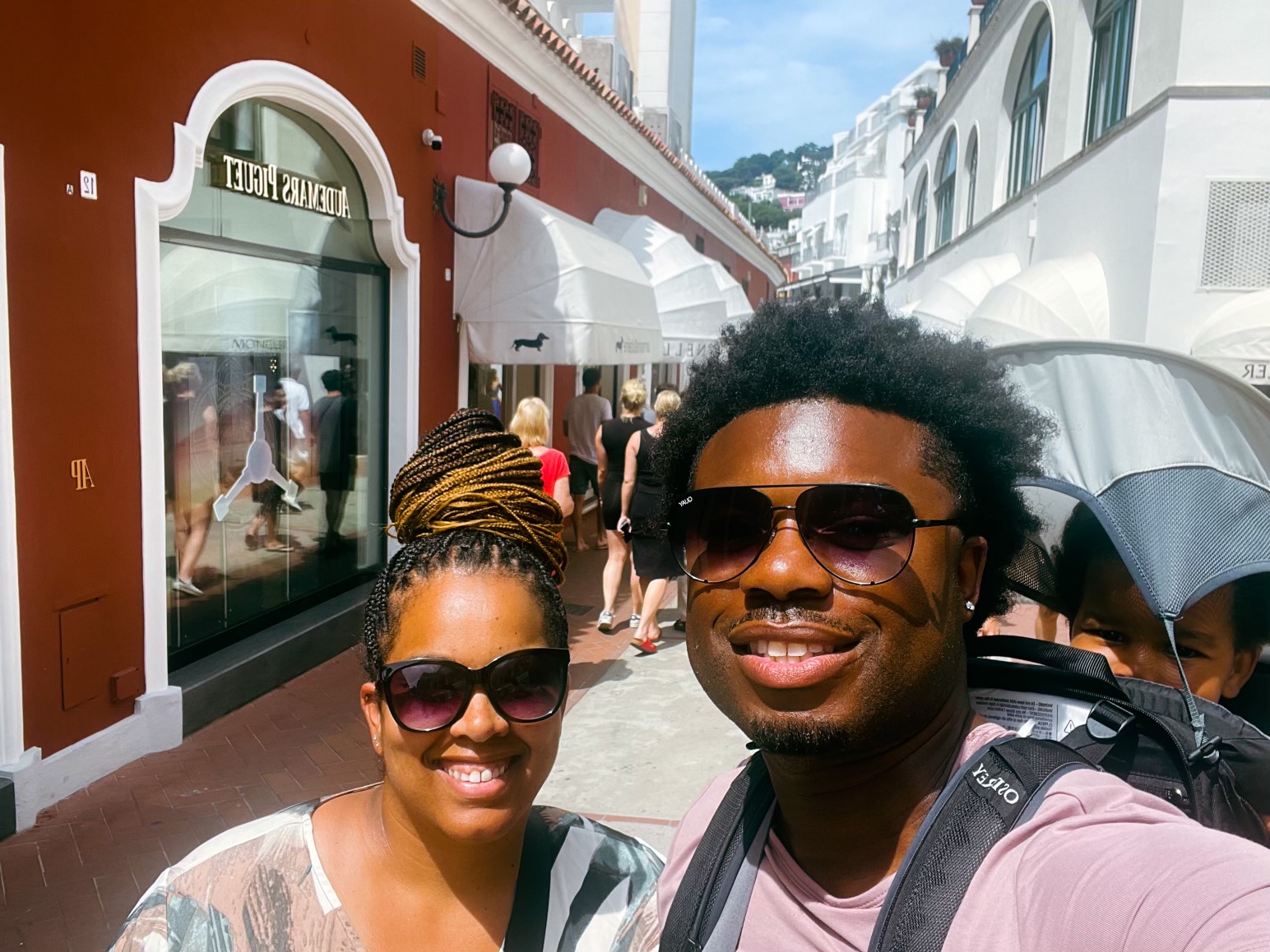
On Capri, we took a cab up the mountain and explored both Capri town and Anacapri. We did not organize the day around a formal attraction. We wandered through streets, looked into shops, stopped at viewpoints and settled in for a relaxed lunch. The day was manageable with Preston, but it was not especially engaging for him. Much of it involved being carried from one scenic area to another, with few safe places to run. Capri was worth seeing; it simply functioned more as an adult sightseeing day than a toddler-centered one.
Amalfi and Ravello
On our last full day in the Amalfi Coast, we took the ferry from Positano to Amalfi. We walked through the old town, looked at the streets and older buildings and then decided to continue higher into the hills toward Ravello.
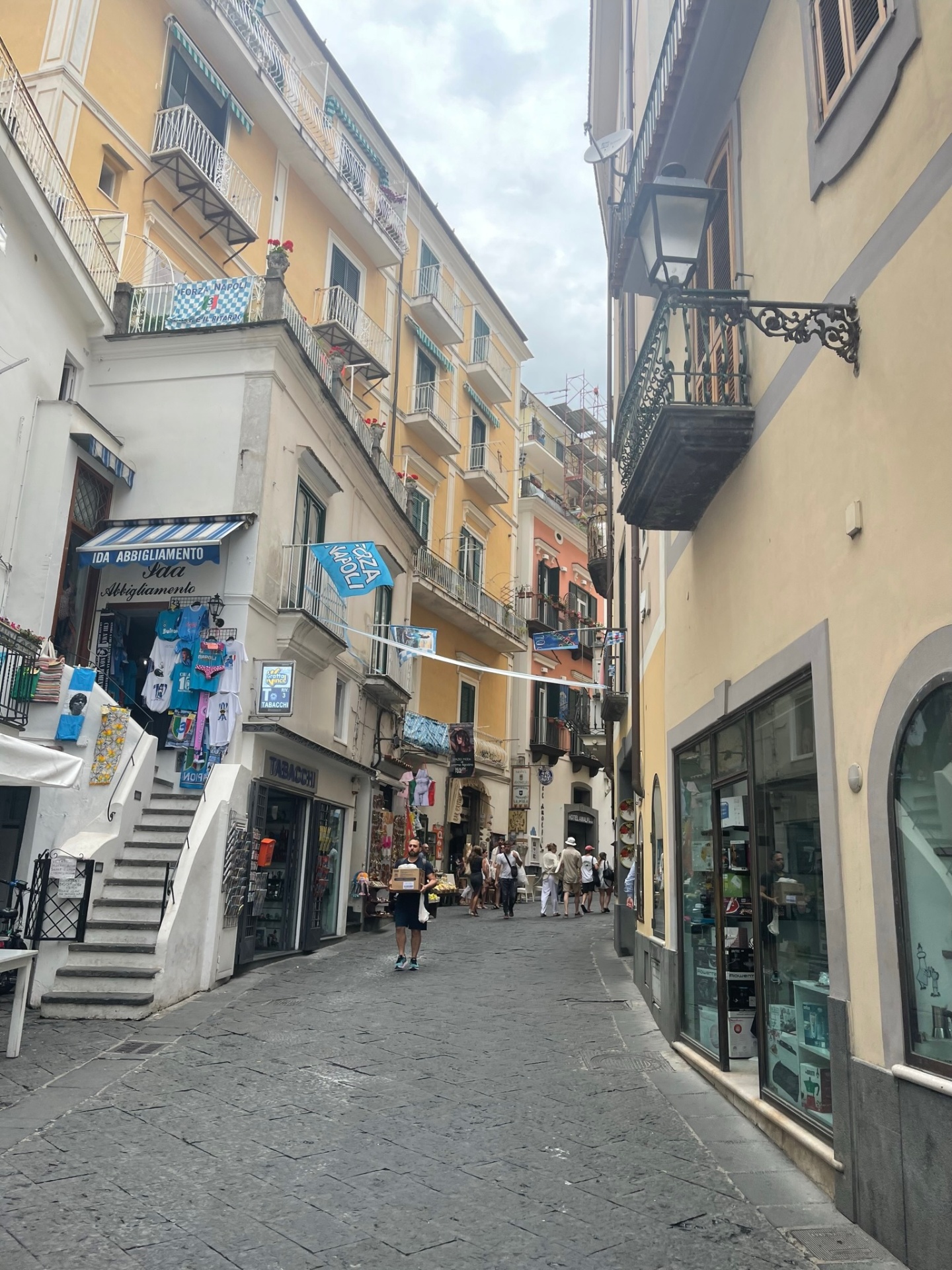
Getting there required negotiating a cab fare in real time — something we had not done before — and then holding on through another series of narrow roads and hairpin turns. The drive was not for the faint of heart, but Ravello rewarded the effort immediately.
Ravello was noticeably cooler than Positano, although still comfortable in shorts and T-shirts. The pace was calmer, the streets were less compressed and the crowds thinned. Positano had sometimes felt shoulder to shoulder; Ravello felt like a place where we could breathe. We did not visit Villa Rufolo, Villa Cimbrone or build the day around a formal attraction. We remained near the central square, ate a meal, wandered among older buildings and stopped to take in the views. We returned by cab to Amalfi and then by ferry to Positano.
A group of older boys was playing soccer in the square. They invited Preston to join them, and suddenly our toddler — who had spent much of Positano being carried through crowds and up stairs — was running, laughing and completely in his element.
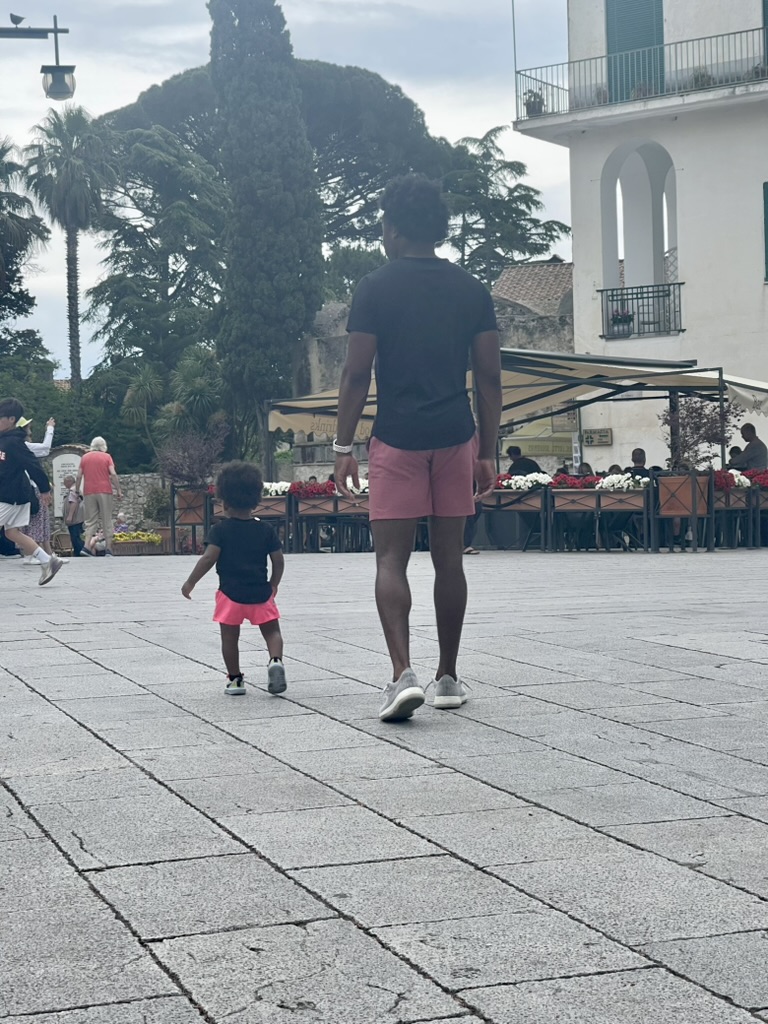
There was no reservation, famous landmark or carefully researched activity attached to the moment. It happened because the pace had slowed enough for us to notice and because Preston finally had a safe, open place to participate in the day.
What We Ate
Positano gave us our first real taste of pasta in Italy, and it was very good. Still, many of the restaurants we happened to choose felt designed for visitors rather than like the intimate, mom-and-pop meals we had imagined. The food was generally fine. The view and setting often carried as much of the experience as the plate. With more advance research, we believe we could have identified additional restaurants that felt more distinctive.
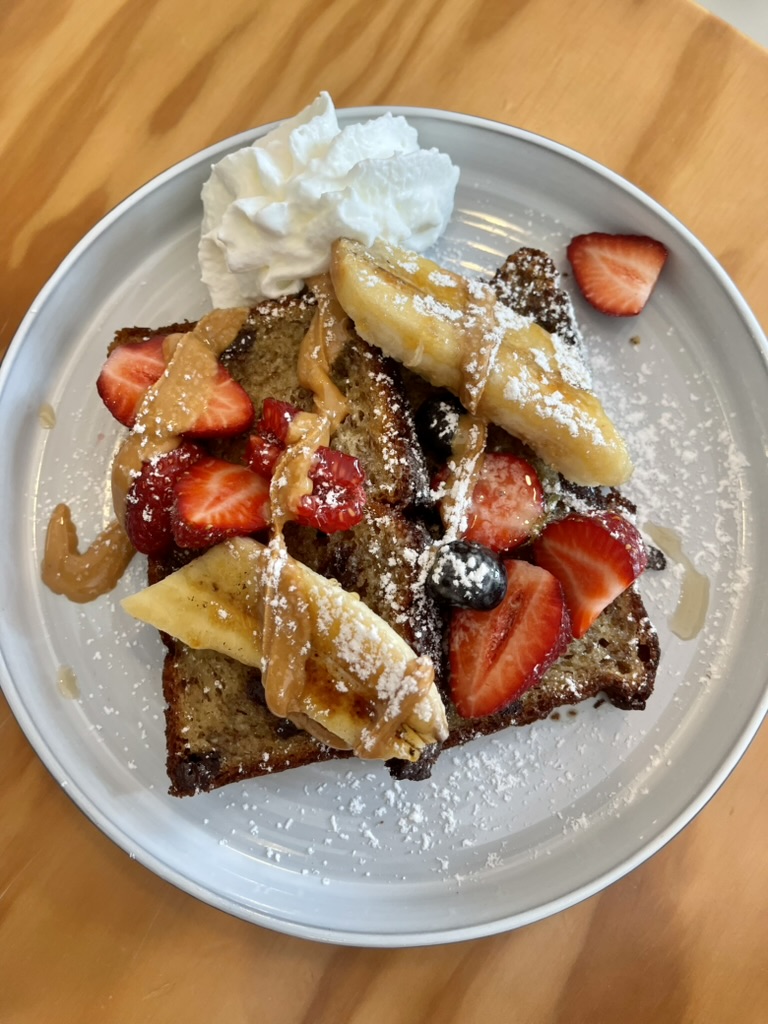
ROC Pizza & Steak was our best dinner. We ordered pizza, but the standout was the wine — our first introduction to Italian wine and the beginning of something we loved throughout the rest of the trip. Casa e Bottega was the breakfast highlight. We tried strawberry, honey and blueberry French toast, along with banana, peanut butter and strawberry French toast and a more traditional omelet. The menu, food and view made it an easy recommendation.
Our first-day pizza and pasta served a different purpose. We were tired, still recovering from the winding transfer and needed a patio where we could wait for check-in. It was not the meal we remember for flavor, but it gave the family somewhere to land. The apartment had a small kitchen, but we used it only to store snacks. Four nights felt too short to buy ingredients and cook, particularly when reaching the restaurants was part of experiencing Positano.
Traveling with a 19-Month-Old
Positano was manageable with Preston, but it was the portion of the trip where the physical environment worked least naturally for our family.
The challenge did not come from an unwelcoming attitude toward children. Staff and residents received us much as people had elsewhere on the trip. The difficulty came from a town built vertically, with steep drops, stairs, narrow roads, crowded ferries and limited flat space.
What Helped Our Family
- The Osprey Poco Instead of a StrollerWe used the hiking carrier throughout the stay. It let us move through stairs and uneven routes while keeping Preston contained near traffic and steep edges.
- One Midday ResetWe planned one return to the apartment rather than moving back and forth. Preston could nap, the adults could rest and everyone could prepare for dinner without multiplying the climbs.
- A Flat Square Near the BeachWhenever possible, we gave Preston time to move in the lower square near the main beach. It became an important counterpoint to long periods in the carrier.
- Ferries Instead of More Road TimeFerries made Capri and Amalfi accessible without returning to the winding coastal roads. Around boats and docks, we stayed attentive to child-safety procedures and appropriately sized life-vest availability.
- A Light Daily StructureOne principal outing was enough. The destination already required significant walking and vigilance; adding a tightly packed schedule would have made the days harder.
Getting Around Positano
We normally value the freedom of a rental car. In Positano, not driving was the freedom. The professional transfers, ferries and our own feet created a workable transportation plan without asking either parent to operate a vehicle on roads that made us uncomfortable.
Departure was far smoother than arrival. We scheduled an early pickup, and the driver came as close to the apartment as the road allowed. Our luggage was loaded, and we returned to Naples without the uncertainty of the first day. From Naples, we took the train to Rome and stayed one night before returning home to Columbus. The larger itinerary allowed us to enter Italy through Naples, leave the Amalfi Coast by rail and avoid retracing the trip by air.
The Beauty, the Stairs & the Honest Part
What Surprised Us
We expected Positano to be beautiful. We did not expect the view to feel even more dramatic in person. The town's scale became clearest from the ferry, when the full mountainside appeared at once. We also did not expect the physical effort to shape nearly every decision. On some days, the step count reached approximately 20,000. Even a short outing could involve a major descent and climb.
What Photographs Do Not Show
A photograph can capture the colorful buildings without revealing the stairs required to reach them. It can frame a narrow lane without showing shoulder-to-shoulder pedestrian traffic or the vehicle approaching from behind. It can show a balcony view without showing the vigilance required when traveling with a toddler beside a cliff. Early June was already busy. Local residents described it as a quieter period than the height of summer, but some streets still felt crowded enough that we would not personally choose a later visit.
The Weather and Water
The weather was warm to hot, and the water was comfortable for swimming. We did not need jackets or evening layers. Ravello was noticeably cooler, which felt welcome after Positano, but shorts and T-shirts remained comfortable.
Did We Feel Welcome and Safe?
We were welcomed normally, much as we had been elsewhere in Greece and Italy. Nothing about the reception stood out positively or negatively. The safety concerns were practical rather than interpersonal. We were continually aware of steep drops, balconies, stairs, traffic, crowded ferries and the fact that daily life was unfolding on the side of a mountain. We felt capable of managing those conditions, but we did not feel relaxed by them.
The Honest Part
Positano is geared toward a glamorous, elevated travel experience, particularly for visitors willing to spend for it. Shops and restaurants often reflected that market. We window-shopped more than we purchased, and some meals felt more visitor-centered than distinctive. None of that makes Positano unworthy of a visit. It means the destination asks travelers to know what they want. We are glad we experienced it. We also understand why it is likely a one-time destination for our family.
What We Would Repeat & Change
What We Would Do Again
- Hire professional drivers for both arrival and departure.
- Keep the stay to four nights; the length allowed us to see the coast without extending beyond our physical limits.
- Use ferries for Capri and Amalfi rather than adding more time on the roads.
- Choose one principal outing each day and protect one midday reset.
- Carry Preston in the hiking carrier rather than attempting the trip with a stroller.
- Visit Ravello without overplanning and allow the central square to become the experience.
- See Positano from the water, where the full postcard view becomes visible.
What We Would Change
- Research Maiori or Minori as a flatter home base, then visit Positano during the day.
- Study restaurant options more carefully before arrival.
- Confirm the porter meeting point, contact process and luggage plan in writing.
- Ask for exact stair counts rather than relying only on descriptions such as central or accessible.
- Pack even lighter so every luggage handoff remains easy.
- Reserve Arienzo in advance only if it becomes a priority; we researched it but did not experience it.
Who Is This Trip For?
Positano may be a strong fit for travelers who:
- Want an iconic, glamorous destination and are comfortable paying for the setting.
- Enjoy active days and do not mind stairs, hills or long walking distances.
- Can carry a baby or toddler safely through uneven routes.
- Value ferry access to Capri, Amalfi and other parts of the coast.
- Prefer dramatic scenery, beach clubs and adult-forward sightseeing.
- Understand that a central location may still require substantial climbing.
Positano may be more difficult for travelers who depend on a stroller or need step-free movement, want a toddler to spend most of the day walking independently, prefer uncrowded streets and flat promenades, dislike planning movement around terrain and luggage handoffs, or are looking for a destination where spontaneous returns to the accommodation are easy.
Would We Return?
Probably not to Positano itself.
The four-night stay felt complete. We saw the famous view, visited the places that interested us and learned what the destination required from our family. If we returned to the Amalfi Coast with small kids, we would investigate Maiori or Minori as a flatter base and visit Positano by ferry for the day. That approach could preserve the beauty of the coast while making ordinary family movement easier.
What Positano Left With Us
Costa Rica had given us the confidence to begin. Santorini had shown us that we could take the intimidating flight and enter a celebrated destination with a toddler. Crete had shown us how easy family travel could feel when the place matched our rhythm. Positano gave us a different lesson. We could stop choosing a destination simply because the world told us it was extraordinary. We could admire the cliffside, enjoy the ferry view, drink our first Italian wine and still be honest about the difference between a place we were glad to see and a place we wanted to return.
The memory that lasted was not the most glamorous one. It was Preston running into a soccer game in Ravello. In that moment, he was not being carried through our vacation. He was part of it.
The world is bigger than our block. Positano reminded us that exploring it thoughtfully means paying attention not only to what is famous, but to where our family feels most fully itself.
Travel Thoughtfully. Explore Together.
Not only a view worth seeing, but enough space for our family to enter the story themselves.
Practical Planning Guide
Everything we booked, packed and learned in Positano — gathered in one place so you can plan your own version of the trip.
Where We Stayed
- La Perla di Chicca – De Vivo RealtyA central section of Positano — a two-level apartment with a compact kitchen, bathroom, living area, pullout sofa, balcony and loft sleeping space.
- What WorkedBreathtaking view and workable location; a washing machine for a longer trip (no dryer — clothing was hung to dry).
- What Required PlanningA daily climb remained necessary despite the central location; the apartment itself was fine rather than a standout recommendation.
What We Did
- Spent a beach-club afternoon at Fornillo Beach and Da Ferdinando.
- Took a ferry to Capri and explored Capri town and Anacapri without a fixed agenda.
- Took a ferry to Amalfi, walked the old town and hired a cab to Ravello.
- Allowed Preston to play in the lower square near Positano's main beach.
- Window-shopped, ate throughout the town and protected one midday villa reset.
What We Packed or Arranged for Preston
- Osprey Poco hiking carrier; we did not use a stroller.
- Supportive walking shoes for the adults and water shoes for the rocky beach.
- Sun protection, water, familiar snacks and enough supplies to avoid unnecessary villa returns.
- Light luggage that could be managed during roadside and porter handoffs.
- Advance attention to ferry child-safety procedures and appropriately sized life-vest availability.
What We Booked in Advance
- Ryanair flight from Chania to Naples.
- La Perla di Chicca apartment.
- Private driver from Naples to Positano.
- Roadside luggage collection arranged through the host.
What We Arranged After Arrival
- Same-day seating at Da Ferdinando Beach Club.
- Same-day ferry tickets to Capri by arriving when the port opened.
- Ferry tickets to Amalfi and a cab between Amalfi and Ravello.
- Return driver to Naples for the train to Rome.
Our Most Helpful Advice
Book the driver. Ask for the stair count. Confirm the luggage handoff. Pack less than you think you need. Carry everything required until the planned midday reset. Choose one main outing per day, and remember that the famous view is only one part of how the destination will feel to your family.
The famous view is only one part of how a destination will feel to your family.