Block Guides
Copenhagen
Five nights in a quiet capital that treated our kids like citizens instead of guests.
We based ourselves in a two-bedroom apartment in the Latin Quarter and let the city's own rhythm shape the week: a playground that teaches road rules, trains with room for strollers and bikes, a harbor bus included in the transit pass, food halls where four people could order four different dinners, and one easy train ride across the Øresund to Malmö.
A City That Made Room for Everyone
Our first impression of Copenhagen arrived after an extremely long travel day. We had left Madeira before dawn, connected through Lisbon and reached our Latin Quarter apartment around 6:00 p.m. We were tired enough that the first evening did not need to be ambitious. It only needed to work.
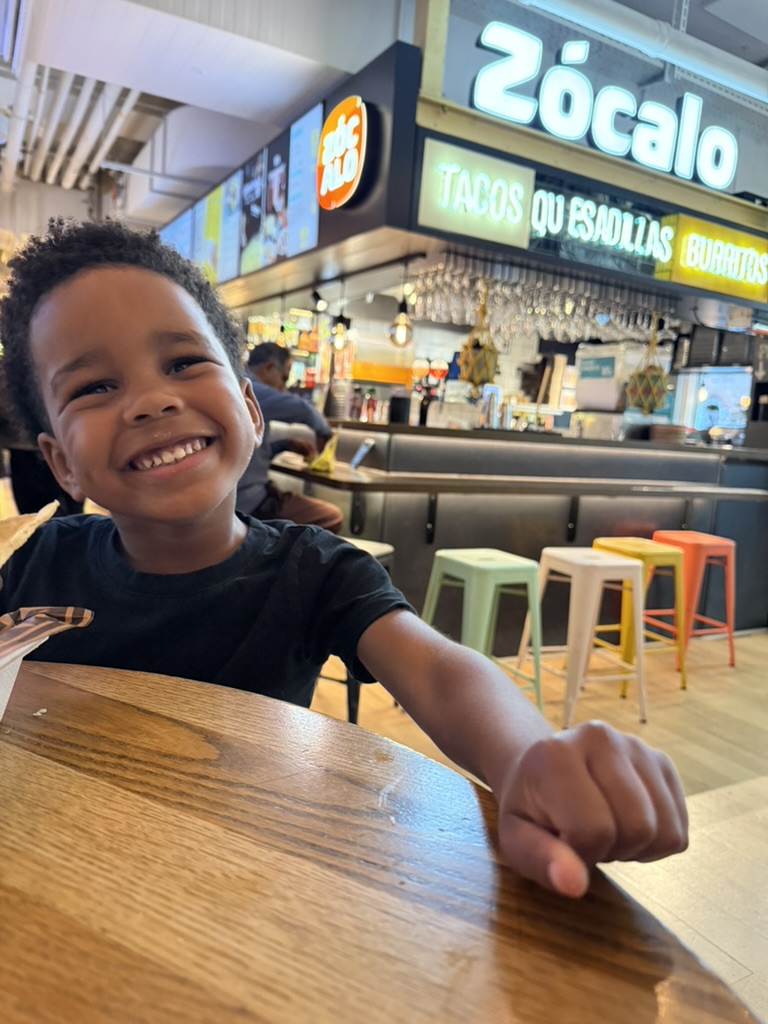
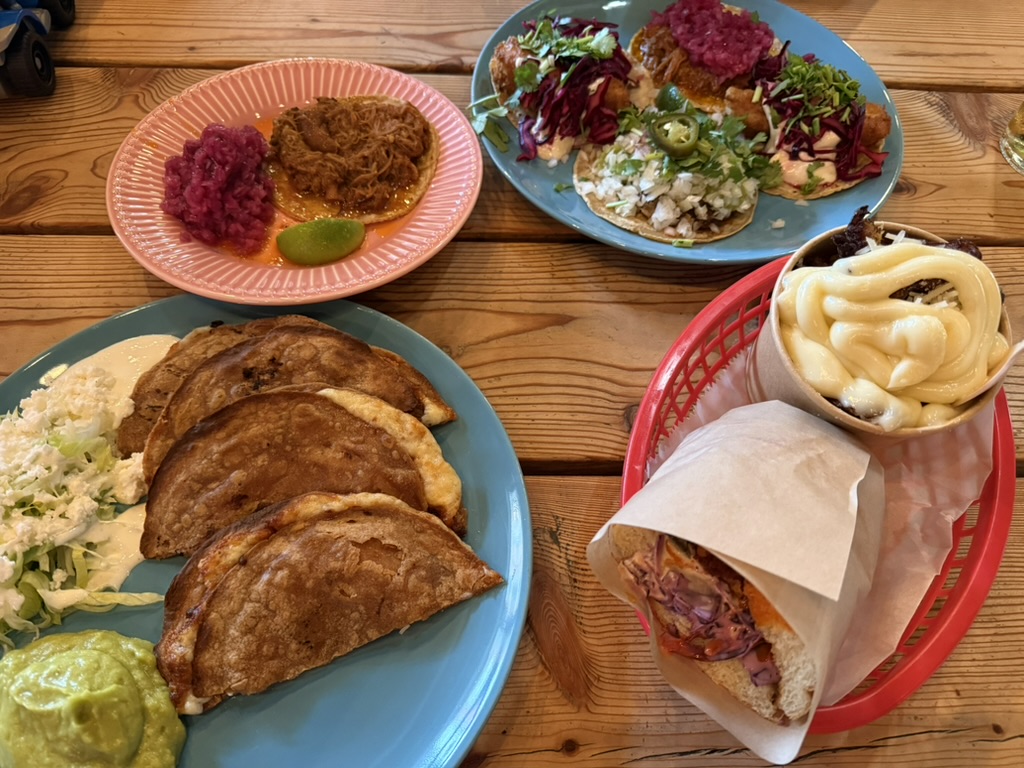
Tivoli Food Hall gave each person a different answer. Preston chose tacos. Avery ate French fries. I had Indian food. Kyle ordered a burger from Cock's & Cows and declared it possibly the best burger he had ever eaten. We did not have to negotiate one menu or ask the boys to stretch farther than the day allowed. The city met us where we were.
That feeling continued. Copenhagen was strikingly quiet for a capital city. So many people moved by bicycle that the center did not carry the same constant engine noise we associate with large American cities. The stillness was noticeable on the first night and remained noticeable every day.
Then the practical details began to reinforce the emotional first impression. Trains had room for bikes and strollers. Stations had lifts when we needed them. Parks appeared inside the itinerary without requiring tickets or a major plan. A playground taught children the rules of the road, and a science center gave a two-year-old and a four-year-old hours of meaningful play. Even the harbor bus felt like an attraction.
Copenhagen did not ask us to build an adult city trip and then search for places to insert the children. It gave every person a reason to enjoy the same day. That is what made it feel less like a destination we were visiting and more like a city where we could imagine living.
Copenhagen did not merely accommodate our children. It felt designed around the idea that families belong in the city.
A Walkable Base with One Easy International Day Trip
The Latin Quarter put the apartment close enough to Copenhagen Central Station, Tivoli Gardens, Nyhavn and the city center that walking could remain the default. Trains extended that range to Juno the Bakery, Fælledparken and Experimentarium without making the stroller feel like a burden.
The route widened across the water in two ways. The train crossed the Øresund to Malmö for a low-pressure day trip, while Copenhagen's harbor bus connected the northern waterfront to Reffen and later carried us back toward Nyhavn. By the end of the stay, the boat was not a special excursion. It was simply part of how the city worked.
The Latin Quarter Made Copenhagen Feel Close
We chose a modern two-bedroom Airbnb in the Latin Quarter because it gave us the combination we consistently value with young children: separate sleeping space, a shared living room, a kitchen and a location that reduced daily transportation decisions. The apartment sat off a small courtyard with several other residences in the same building.
The apartment gave us what a family city stay needs most: a place to spread out without moving us away from the life of the city.
Kyle and Avery shared one bedroom. Preston and I shared the other. The arrangement allowed each child to settle with an adult while preserving a central living space for the family. One bathroom was enough, laundry was available and the lack of air conditioning never mattered in the early-June weather.
There was no elevator, and we climbed one or two flights of stairs. That detail did not create a meaningful disadvantage. The greater value was outside the door: Tivoli, the central station and large parts of the center were walkable, while the train system opened the rest of the itinerary. The rate felt fair for the space and location.
The Longest Day Ended with the Easiest Dinner
Madeira Began the Day Before Copenhagen Finished It
We left our Madeira hotel around 4:30 a.m. and returned the rental car by approximately 5:45. After connecting through Lisbon, we reached Copenhagen and used a prearranged airport transfer that already had car seats available. By the time we arrived at the apartment around 6:00 p.m., the travel day had been long but manageable.
Tivoli Food Hall Let Everyone Choose
We walked to Tivoli Food Hall because we knew a collection of vendors would give every person a realistic dinner. Preston had tacos, Avery had French fries, I chose Indian food and Kyle ordered from Cock's & Cows. His burger became the standard against which every later burger was compared.
The meal established two Copenhagen truths immediately. The food was expensive, and it was very good. More importantly on that first night, variety removed the pressure to make one restaurant work for all four of us.
The Quiet Was the Surprise
Even in the main city center, Copenhagen carried a stillness that felt different from home. Bicycle movement was everywhere, but traffic noise was not. The city seemed busy without sounding hurried, and that calm became one of the qualities we remembered most.
The First Full Day Explained the City
Juno Was Worth the Morning Detour
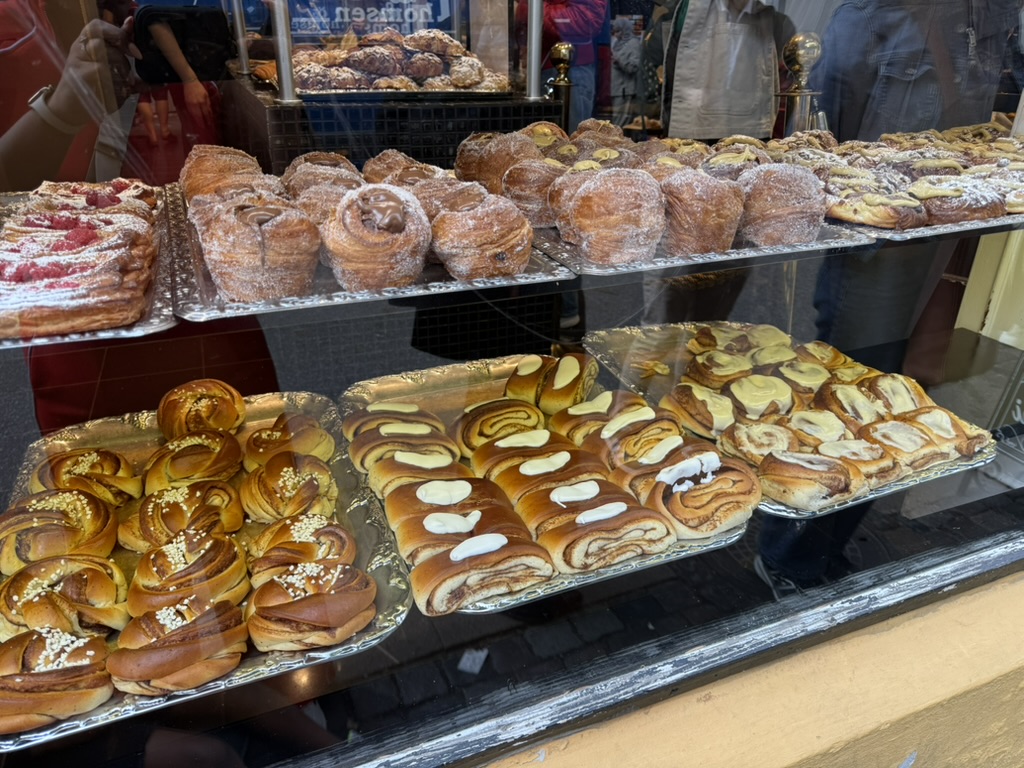
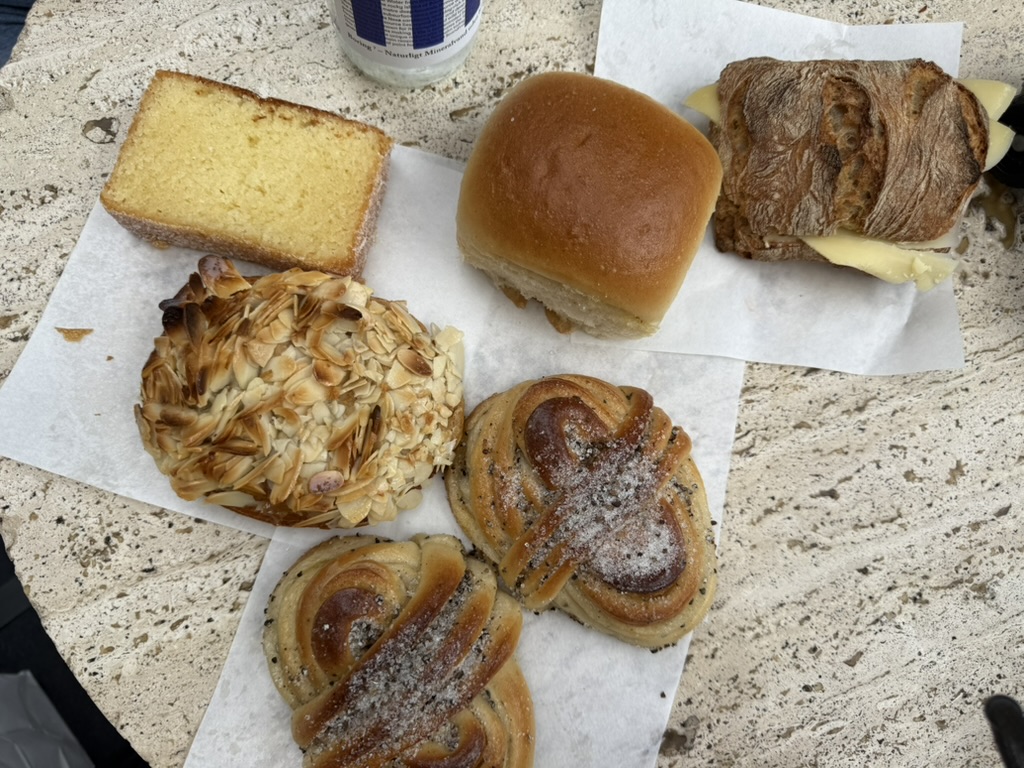
We took the train toward Juno the Bakery and walked the final few minutes. The cardamom bun was the reason for the trip, although we ordered several pastries. Starting with a destination bakery gave the adults something we were excited to seek out before the day shifted toward the boys.
The Traffic Playground Made Bicycling into Play
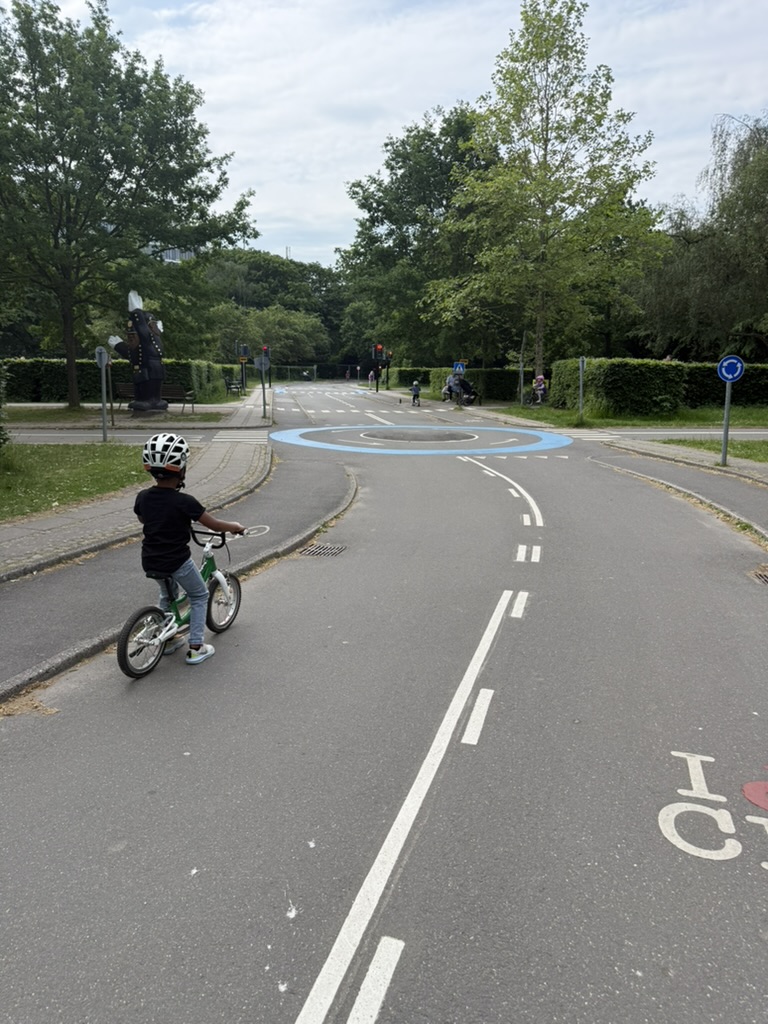
From Juno, we walked to the Children's Traffic Playground in Fælledparken, across from Parken Stadium. The space recreated an entire miniature road system: traffic lights, stop signs, crosswalks, roundabouts, bike lanes, regular lanes and pretend service stops.
Bikes and helmets were available for children during our visit. Preston enjoyed the larger course on an appropriately sized bike. Avery, who had never used a balance bike, preferred the smaller area with tricycles, a pretend car wash, a play car and slides. The playground let children practice how the city actually moves.
The boys could play at different levels in the same place, and we could stay without rushing toward the next reservation. For Preston, the Traffic Playground became one of the two experiences he later asked to repeat.
Nyhavn Was the View; Broens Was the Practical Lunch
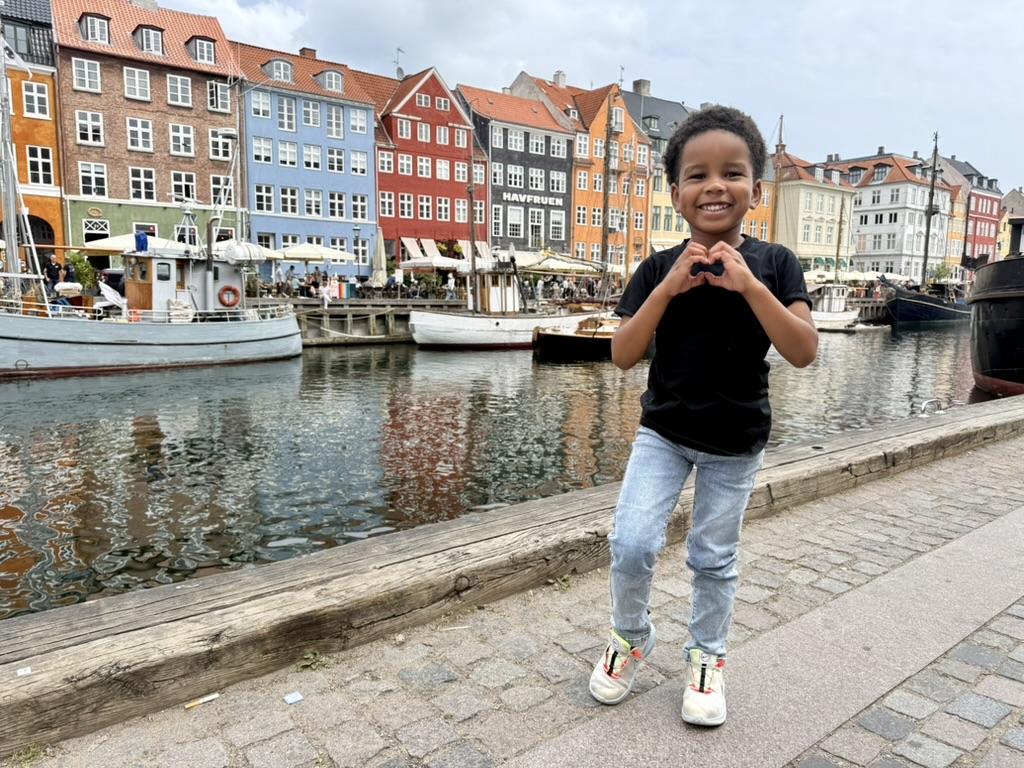
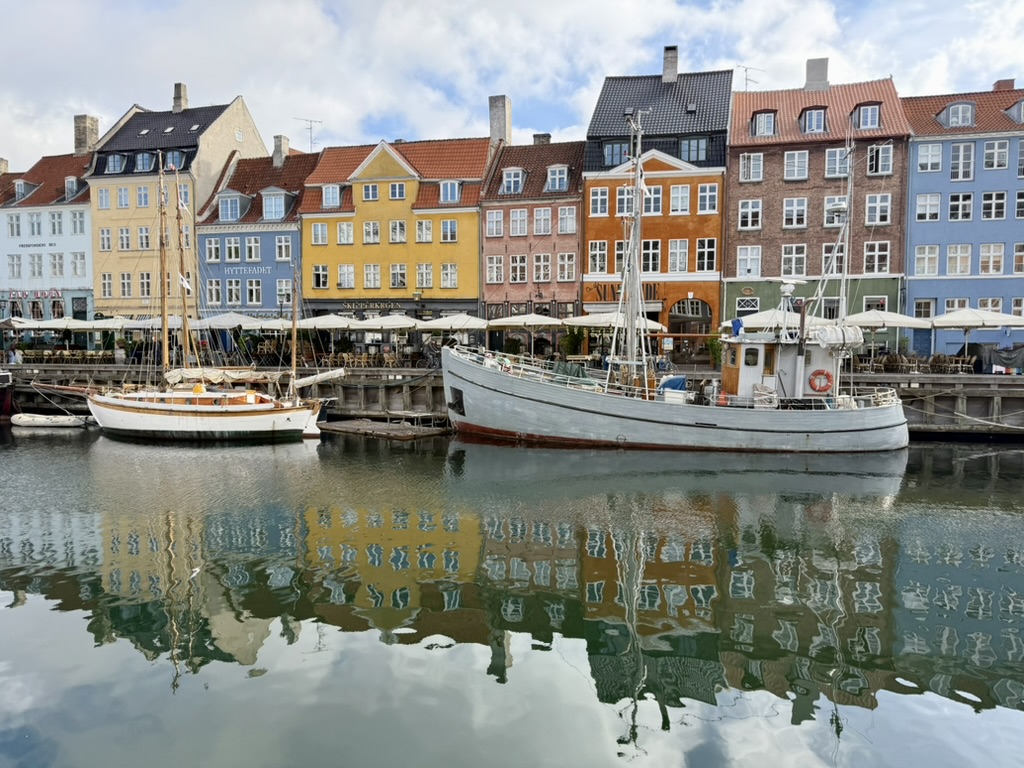
We took the train back toward the center and walked through Nyhavn. The colorful facades were every bit as photogenic as expected, but we continued across the bridge to Broens Street Food for lunch. The food hall offered variety at prices that felt more reasonable than committing to a full meal directly below the famous buildings.
That calculation mattered with young children. If the boys did not eat what we bought, a flexible food-hall order created less pressure than a formal restaurant meal. We still received the Nyhavn experience, then ate where the family setup worked better.
Reffen Became the Place We Wanted to Repeat
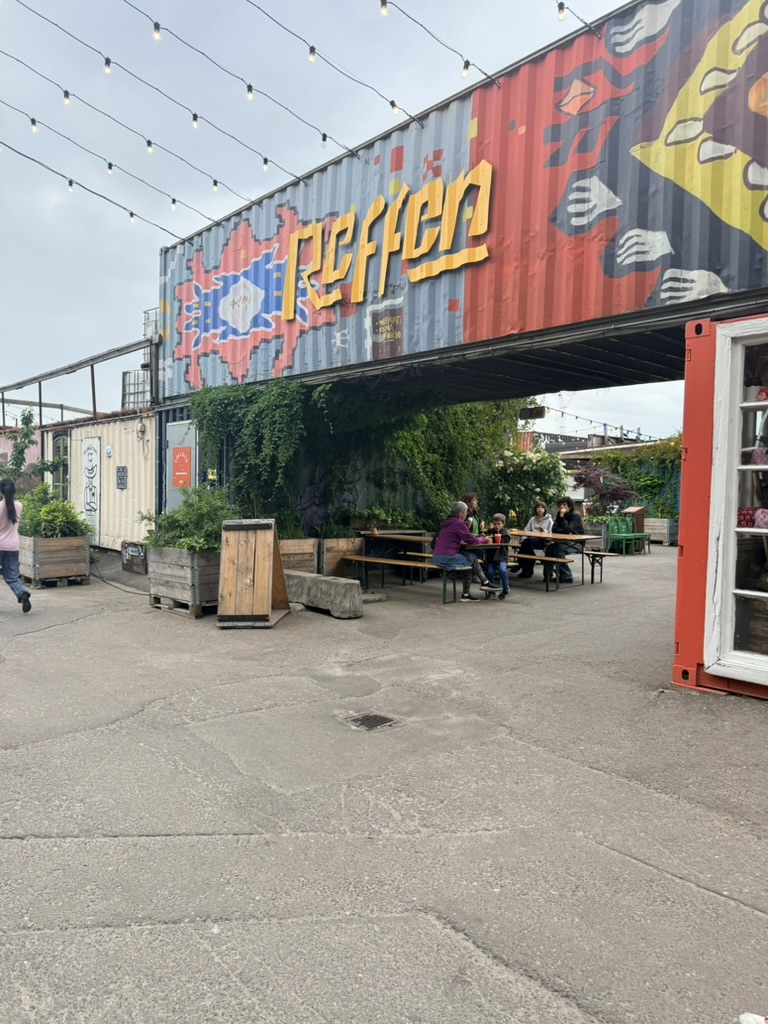
We continued on foot to Reffen. The walk was substantial, but it revealed parts of Copenhagen we would not have seen from a train. Later, once we understood the harbor bus, we found a much faster way to make the same connection.
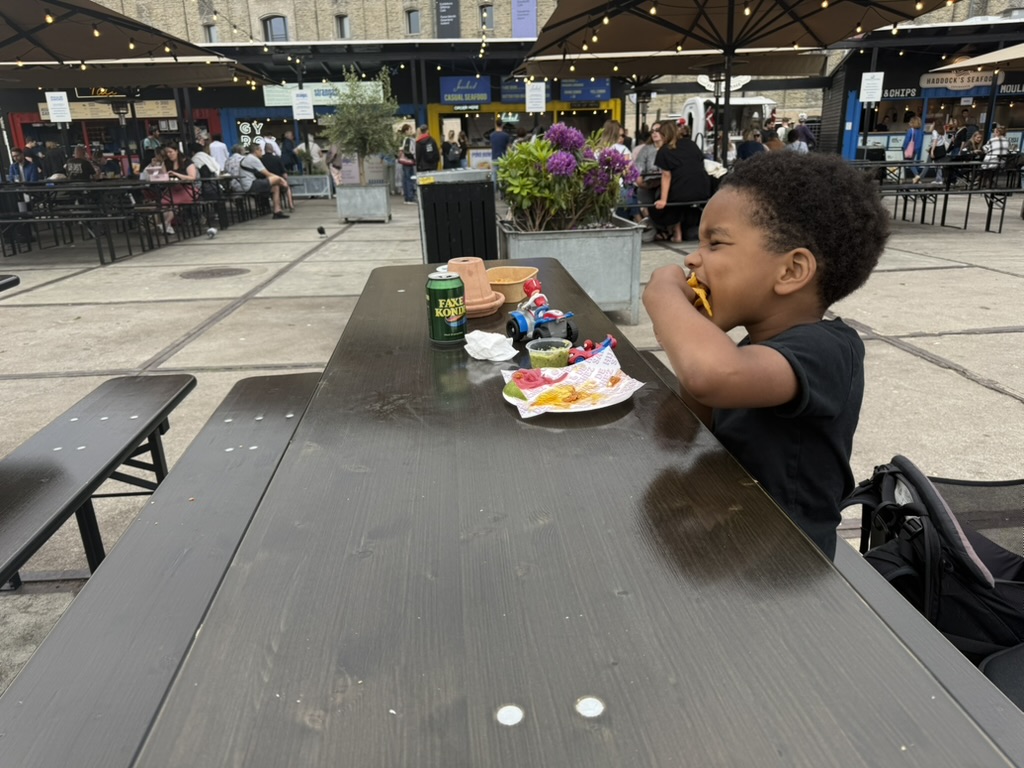
Reffen combined the things Kyle and I most enjoy when we travel: food from around the world, drinks, outdoor space, water and an energy that felt local without making a family seem out of place. The boys could remain part of the evening while the adults still felt that we had chosen the destination for ourselves too.
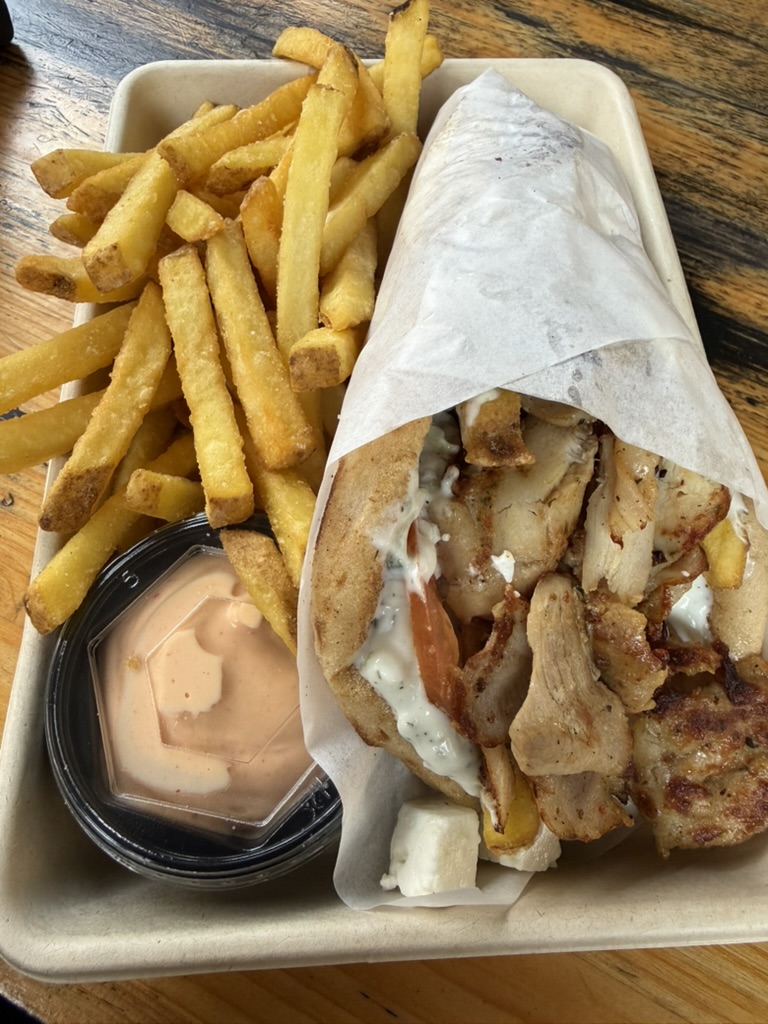
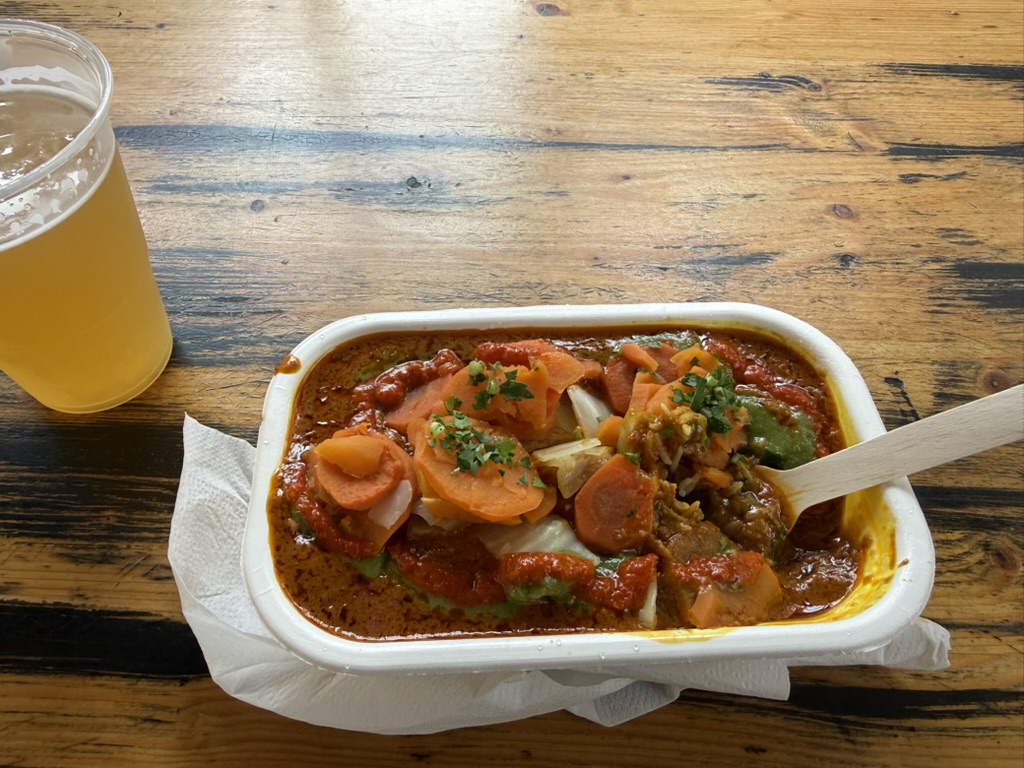
The essential order was the domodar from Baobab, a rich West African peanut stew rooted in Gambian and Senegalese cooking. It was flavorful enough to become the single dish we would tell another traveler not to miss. We also tried food from The Real Greek and finished with churros and ice cream.
Malmö Was the Day Trip We Did Not Overplan
The Morning Began at Copenhagen's Oldest Bakery
We stopped at Sankt Peders Bageri for pastries and excellent iced coffees before walking toward the train. We also bought McDonald's chicken nuggets and fries for Avery and carried fruit for him. That is part of our real family travel: when a predictable meal helps a child eat, we use it without shame.
Crossing into Sweden Was Almost Effortless
The train to Malmö was exceptionally easy and clean. We arrived without a formal sightseeing schedule, walked through the central square and let the city introduce itself. Malmö itself felt exceptionally clean. The rest of the plan was simply to find enough space for the boys to move.
A Map Search Found One of the Trip's Best Playgrounds
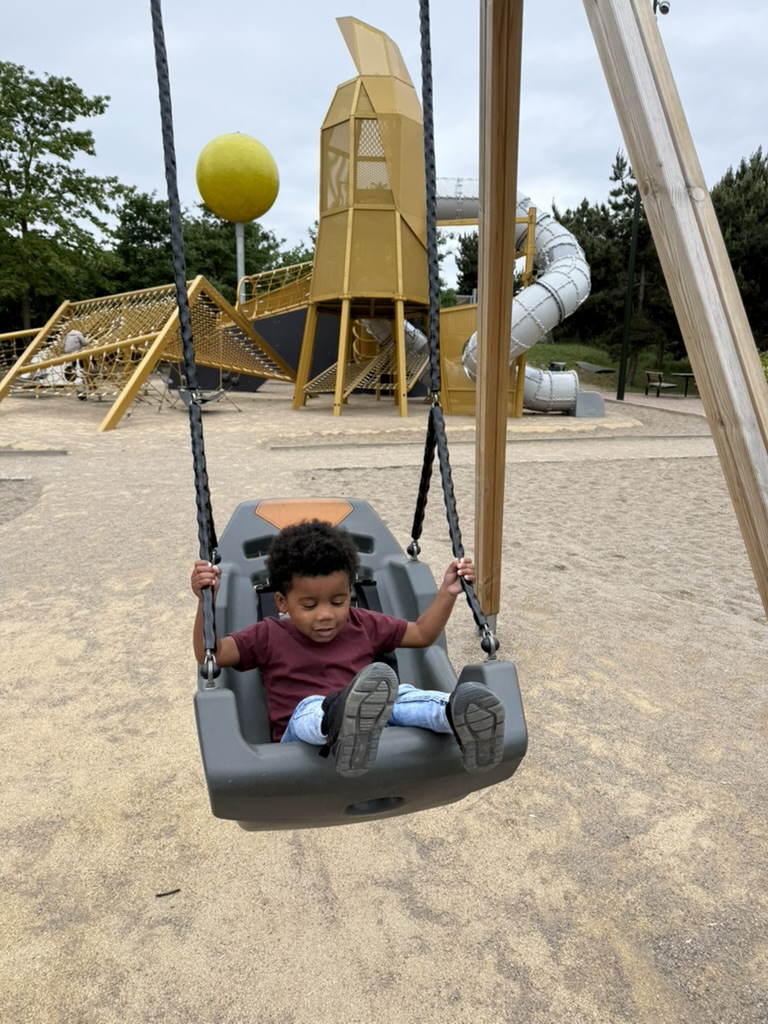
We used our apps to find Sollekplatsen in Malmö's Västra Hamnen. The solar-system-themed playground had a large climbing structure, multiple swings, a seesaw, spinning equipment and smaller options for Avery. The boys played for roughly two hours, and the stop ranked among the best playground experiences of the trip.
Malmö Saluhall Gave Us Another Excellent Food Hall
Lunch was at Malmö Saluhall. We ordered tacos from Maya Cantina and a sandwich from POMS Öl & Mackor. The food was very good, and the market reinforced the value of letting each person choose without turning lunch into a long negotiation.
Christiania and Nyhavn Brought the Day Back to Copenhagen
After the return train, we walked through Freetown Christiania. We then passed Nyhavn again because the sky had cleared and we hoped the water would hold a stronger reflection of the buildings. It did. One of those photographs now hangs in our home.
The day worked because it was not asked to prove that we had seen all of Malmö. We crossed into another country, ate well, gave the boys hours of excellent play and returned to Copenhagen with enough energy for one more city walk.
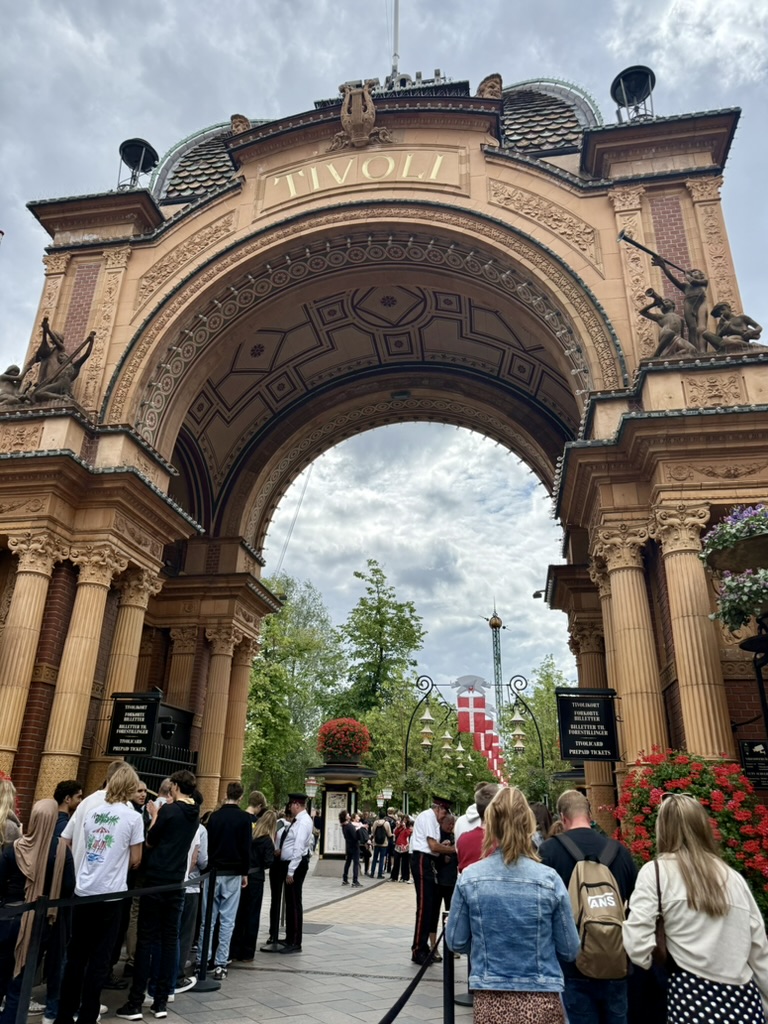
Tivoli Felt Beautiful Before It Felt Busy
Ørstedsparken Filled the Time Before Opening
We began at a bakery near the apartment for egg, cheese and bacon sandwiches. Because Tivoli opened later in the morning, we spent approximately 45 minutes at the playground in Ørstedsparken. The sandbox and climbing equipment gave the boys an easy start, and even with many children present, the park never felt crowded.
The Ride Pass Needed One Extra Step
We had purchased Tivoli tickets in advance but did not initially realize that the ride passes needed to be printed as wristbands at one of the kiosks. At the first ride, staff kindly accepted the tickets on our phone. We then collected the wristbands and used them without difficulty for the rest of the day.
There Was More for Young Children Than We Expected
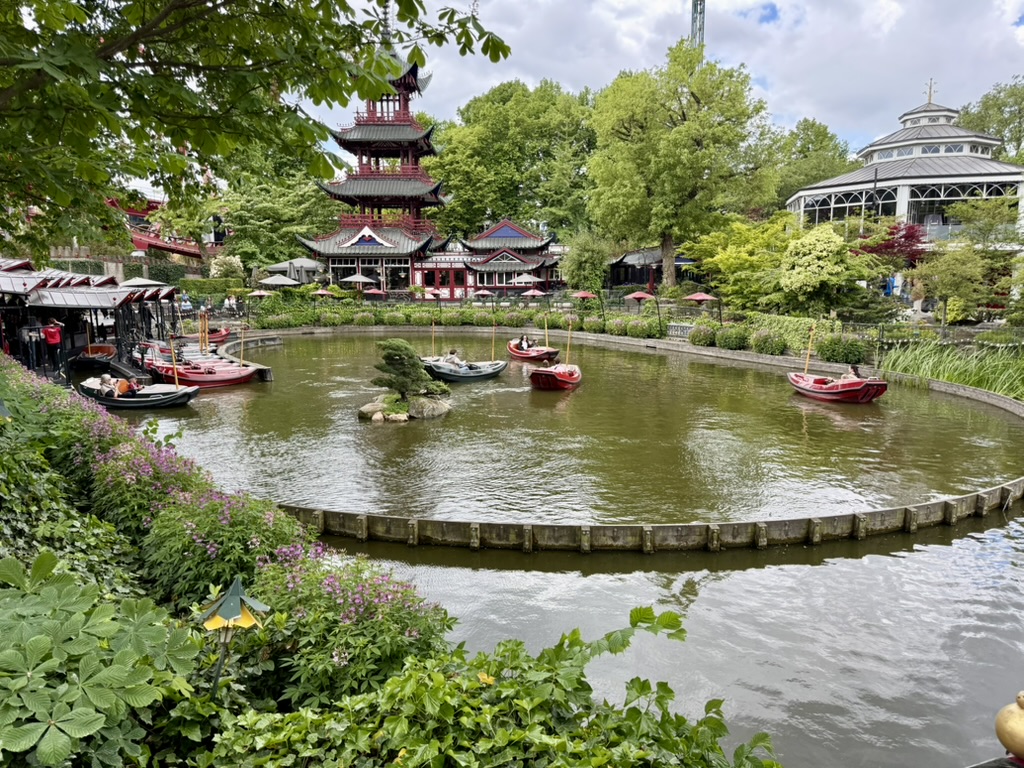
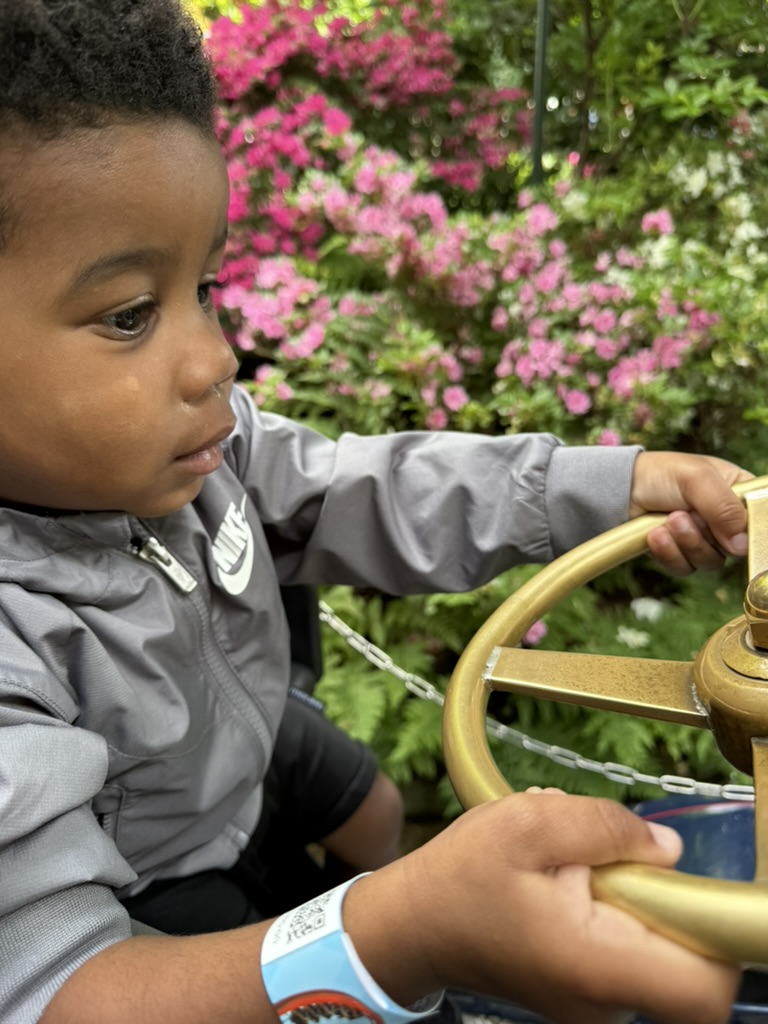
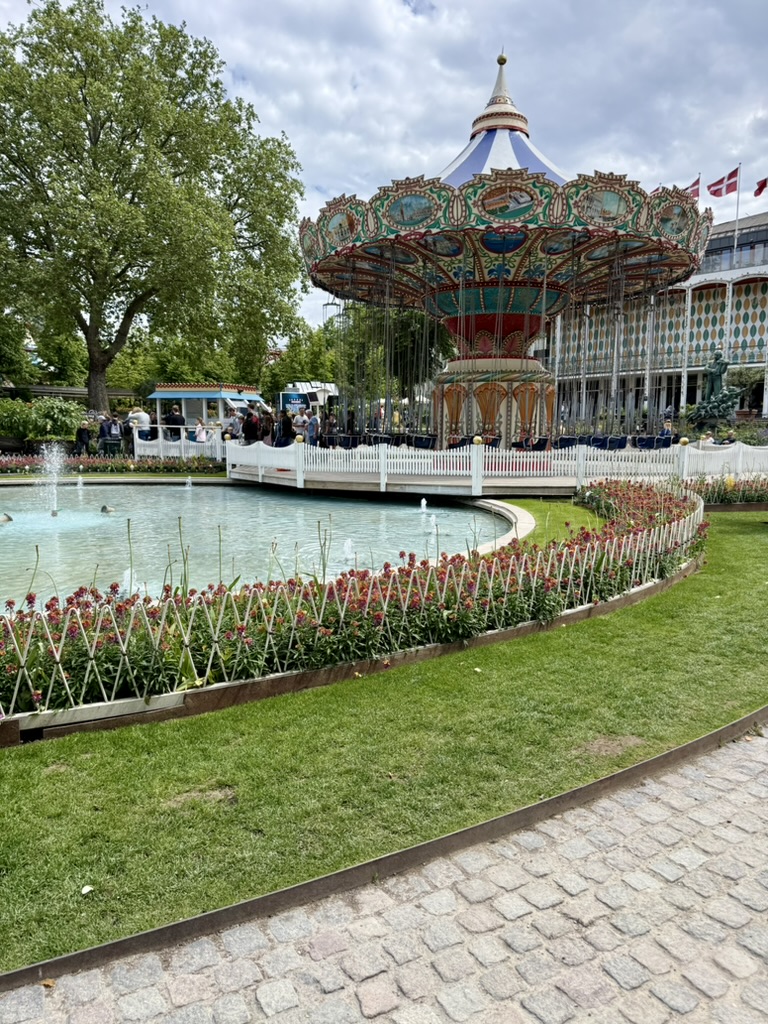
We started with the small mountain-themed wooden coaster. It was faster and included more drops than I expected, and it scared Preston a little. He handled it well, but once was enough. We found a better rhythm on the vintage-style cars, boats the boys could steer, the carousel and a spinning airplane ride.
Preston especially loved a laser-beam ride, which joined the Traffic Playground as one of the two experiences he later asked to revisit. The boats were entertaining for a different reason: both boys wanted to control them, and steering was genuinely harder than it looked.
We Missed the Playground Entirely
Only after the trip did we see videos of Tivoli's playground tucked into a corner of the park. We never noticed it. Families with children our boys' ages should find it early and treat it as a place to reset between rides, especially if not every attraction fits the youngest child.
The Rain Gave Us a Burger Break
A heavy downpour lasted approximately 30 to 45 minutes. We moved inside and ate at Gasoline Grill while it passed. The burgers were very good, although Kyle still gave the overall title to his arrival-night Cock's & Cows burger.
We stayed until around 6:00 p.m. Tivoli remained beautifully landscaped, charming and manageable throughout the day. It never carried the overstimulation or crowd pressure we sometimes expect from an amusement park. Afterward, we returned to the apartment.
The Final Day Gave Every Person a Favorite
Ø12 Was Good and Very Busy
We ate breakfast at Ø12 Coffee & Eatery. The pancakes, eggs and bacon were good, and the atmosphere was lively, although the tightly packed room felt especially busy. From there, we took the train outside the center to Experimentarium and purchased tickets on arrival.
Experimentarium Could Have Filled the Entire Day
We arrived around 11:00 a.m. and stayed until approximately 3:00 p.m. Four hours allowed us to explore a great deal, yet several rooms remained untouched. With slightly older children, a family could easily stay from opening until closing.
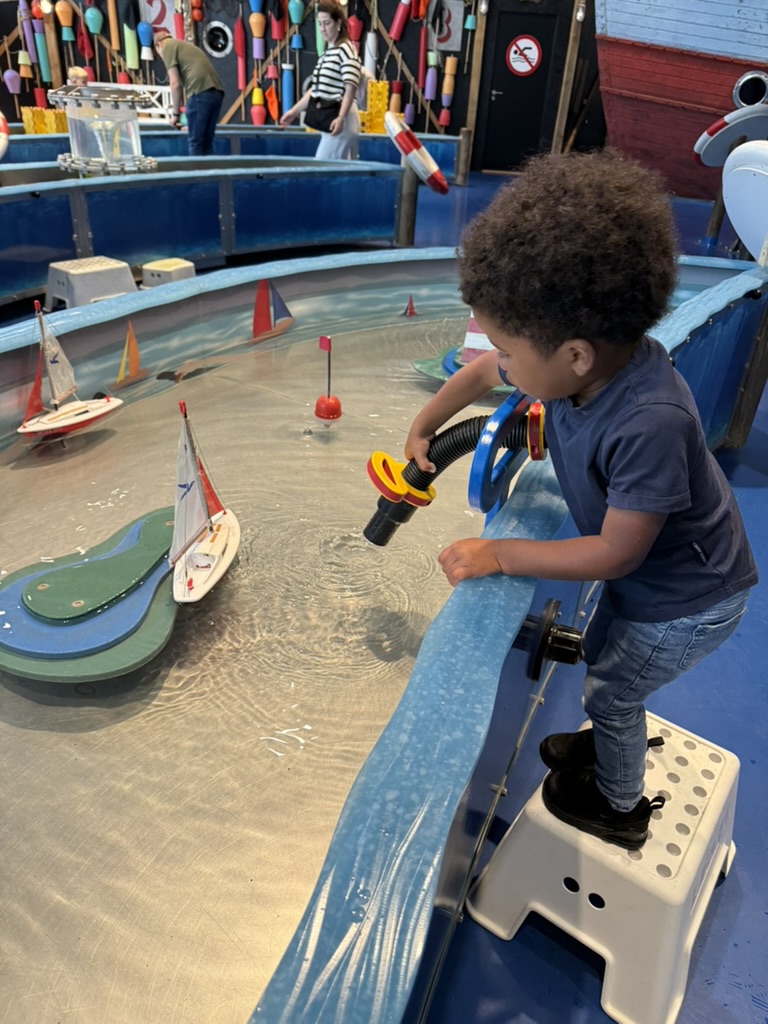
The youngest-child areas were substantial. Preston and Avery climbed, crawled through caves and tunnels, acted out everyday settings such as a doctor's office and kitchen, explored nature-themed play and spent long stretches in the water area with tables, a submarine and a large boat.
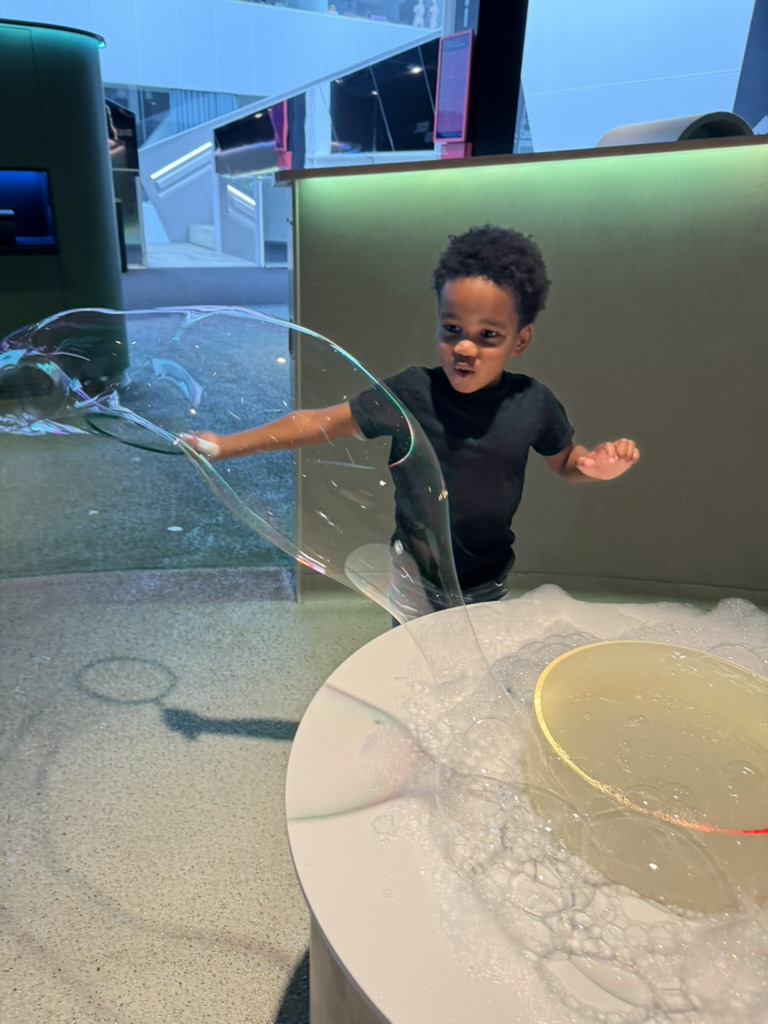
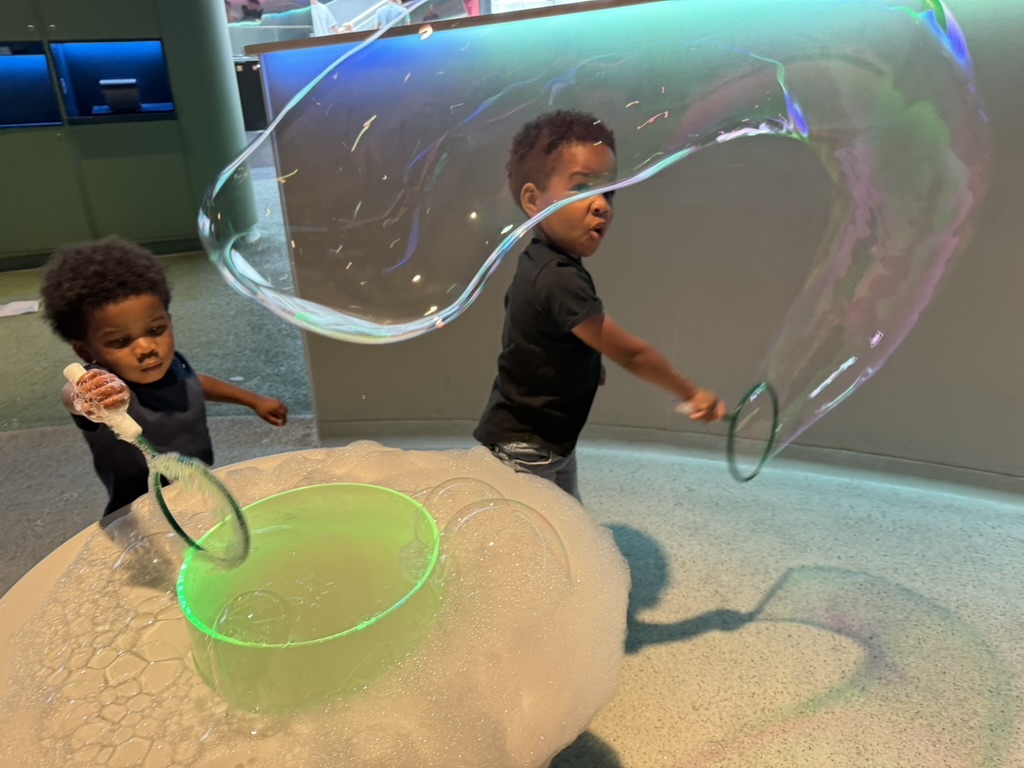
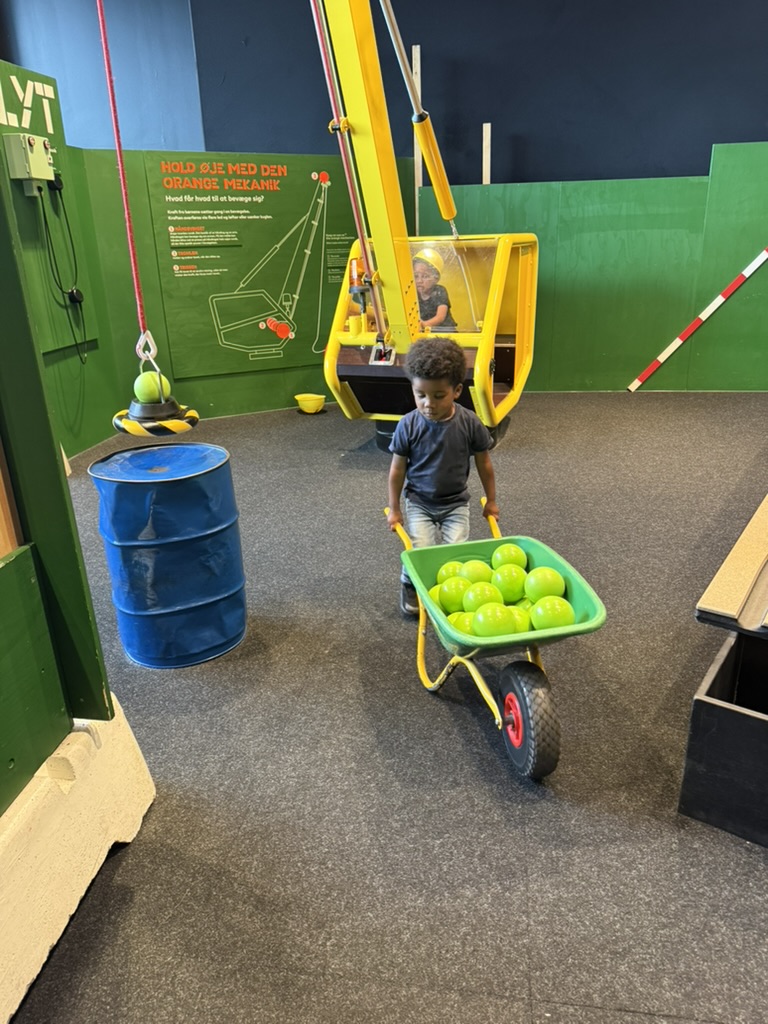
The bubble room allowed them to make enormous bubbles, including one large enough to rise around a child's body. In the construction space, they operated crane- and excavator-like equipment, moved balls upward and watched the pieces travel through overhead systems before returning to a collection bucket. A pedal-powered station gave the same cause-and-effect play another form.
Experimentarium worked because the interaction was not ornamental. The boys could touch, move, climb, pour, pedal and repeat. Avery's favorite experience of the Copenhagen stay came from a place that also appeared capable of entertaining children through approximately age 10 or 12.
The Walk to the Harbor Bus Was Part of the Plan
After Experimentarium, we walked a little more than a mile along the waterfront toward a harbor-bus stop. The distance was intentional: we wanted a long walk so the boys could nap. Once we found the stop and understood the route, we realized the harbor bus was included in our transit pass.
The boat ride became transportation and attraction at the same time. The boys watched the harbor and even saw a seaplane land on the water. We rode to Reffen knowing exactly how we wanted the European trip to end.
Better Weather Opened the Play Space at Reffen
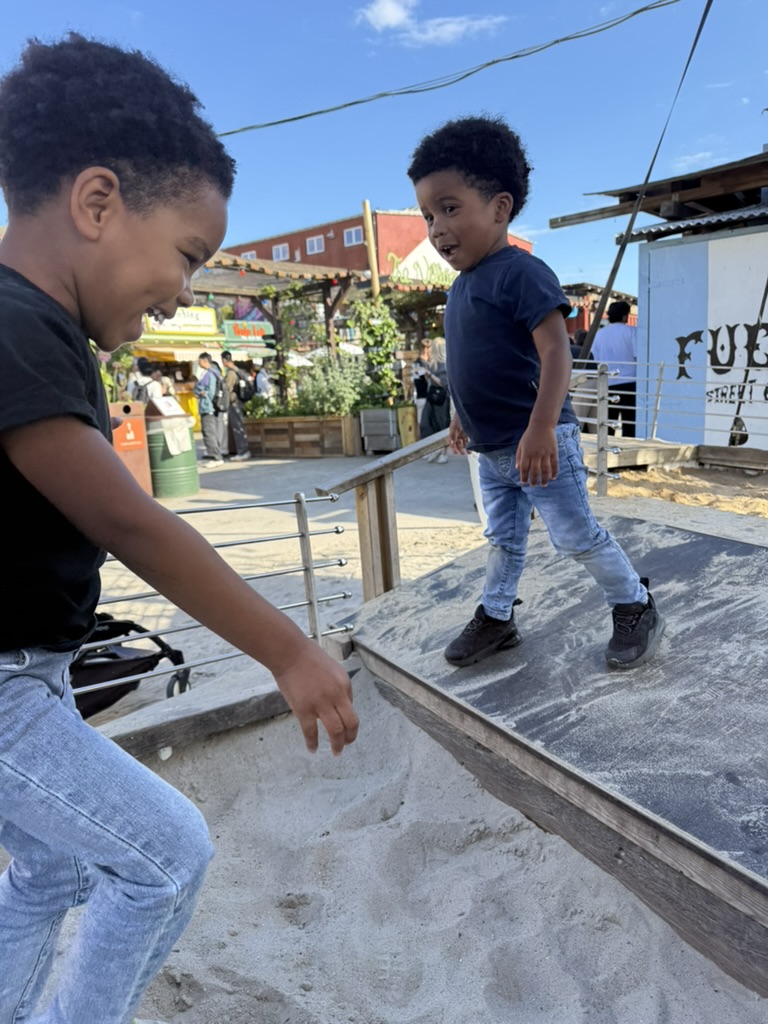
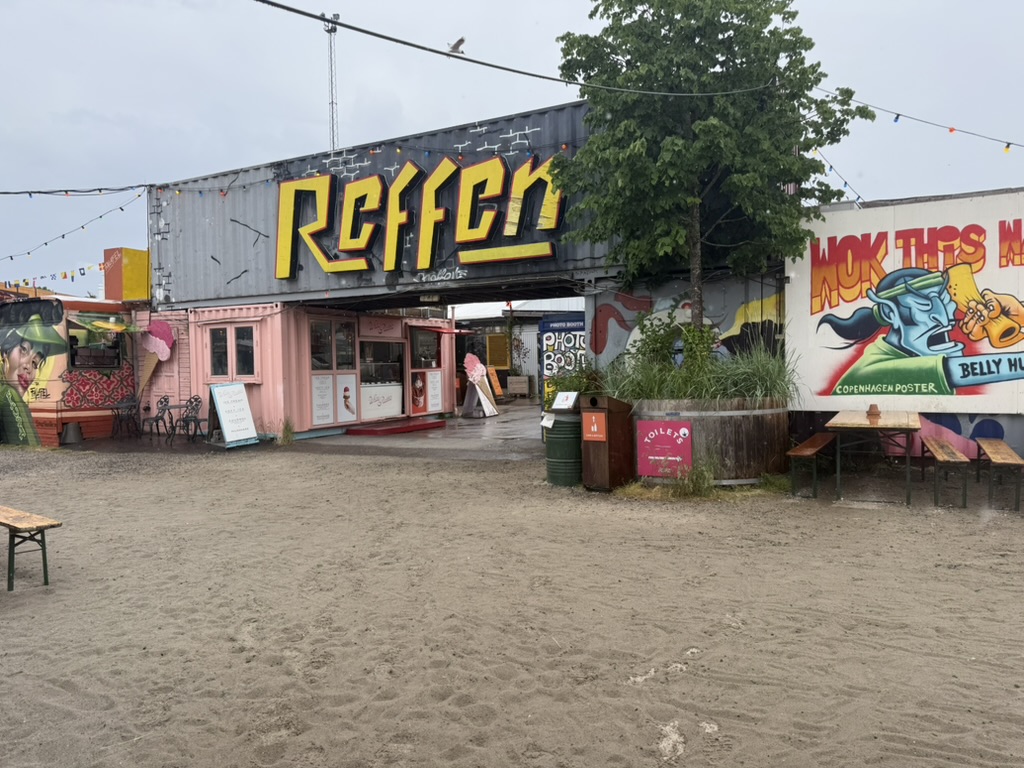
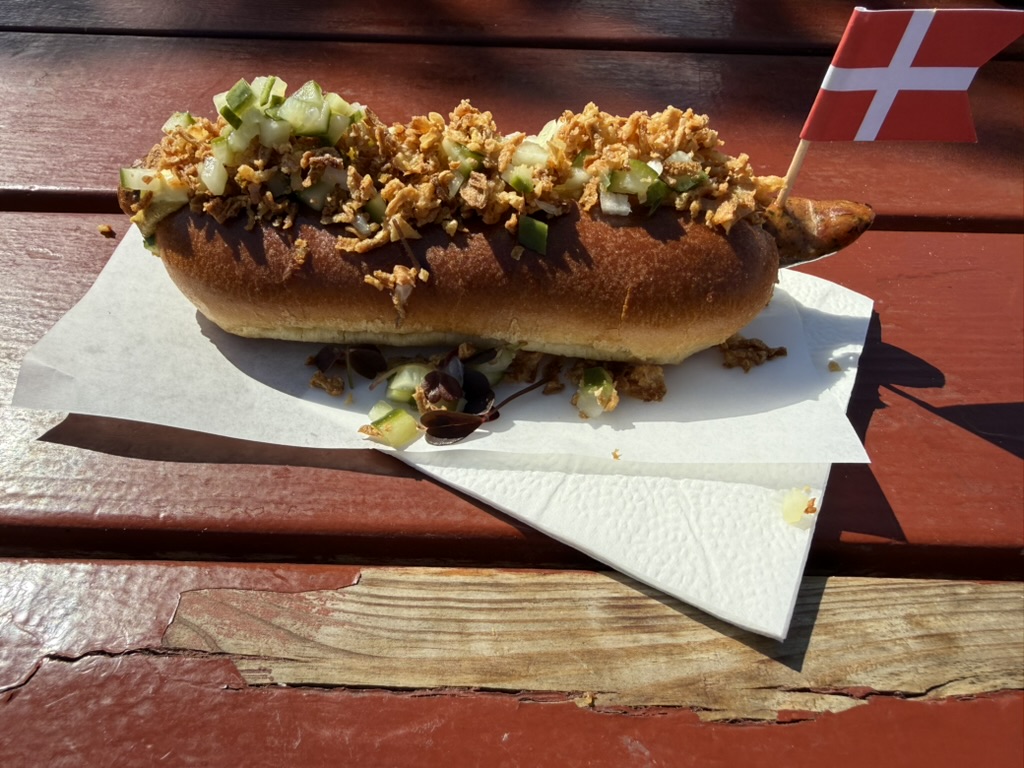
The second Reffen visit had the sunshine the first visit lacked. While we ate from Nordic Hotdog, Fuego and Indian Bites, the boys used the sandbox, slide and small boat play structure. The arrangement captured why Reffen was so easy to love: adults could eat and linger while children could still move and play nearby.
We took the harbor bus back, walked the Nyhavn strip one final time and returned to the apartment to pack. Reffen was not simply a restaurant recommendation. It was the place Kyle and I would choose again without hesitation, and the setting we wanted as the final memory of the trip.
The Apartment Supported the City Instead of Competing with It
Two Bedrooms Preserved the Sleeping Routine
We used the same family division that had worked elsewhere on the trip: Kyle and Avery in one room, Preston and me in the other. The layout gave both children an adult at bedtime and gave the family a living room and kitchen between the bedrooms.
The Missing Amenities Did Not Become Problems
The building had no elevator, but the one or two flights of stairs were manageable. We do not remember air conditioning, and we did not need it. One bathroom never became a meaningful limitation. Laundry was useful, and the apartment had enough room for the stroller, carrier and normal family travel clutter.
Location Was the Feature We Used Every Day
The Latin Quarter allowed us to walk to breakfast, parks, Tivoli, Nyhavn and the central station. That proximity helped Copenhagen remain spontaneous. A spare 45 minutes could become playground time instead of transit, and the final walk home did not require another plan.
Food Halls Let the Family Eat Without Compromise
Reffen Was the Adult Favorite
Reffen was the clearest food recommendation of the trip because it offered more than a collection of vendors. The waterfront, communal seating, drinks and play spaces made it somewhere we wanted to spend time. Baobab's domodar was the must-order dish, while The Real Greek, Nordic Hotdog, Fuego, Indian Bites and churros with ice cream widened the two visits.
The Other Markets Solved Different Parts of the Itinerary
Tivoli Food Hall made arrival night possible for four people who wanted four different dinners. Broens Street Food gave us a less pressured lunch near Nyhavn. Malmö Saluhall became the center of an intentionally loose day trip. In each case, variety was not a substitute for quality. It was the reason adults and children could eat well at the same stop.
The Bakeries Deserved Their Own Route
Juno the Bakery was the planned cardamom-bun destination. Sankt Peders Bageri paired pastries with excellent iced coffee before Malmö. Ø12 carried a breakfast outing. Copenhagen rewarded making food part of the geography rather than treating breakfast as fuel alone.
Predictable Food Was Still Part of the Plan
Avery often relied on French fries, chicken nuggets and fruit. We did not hide that reality or force every meal to become an experiment. Keeping something familiar available allowed the rest of the family to try more, and it kept one child's limited travel diet from controlling the day.
The Infrastructure Did Much of the Parenting Work
The Stroller and Carrier Both Worked
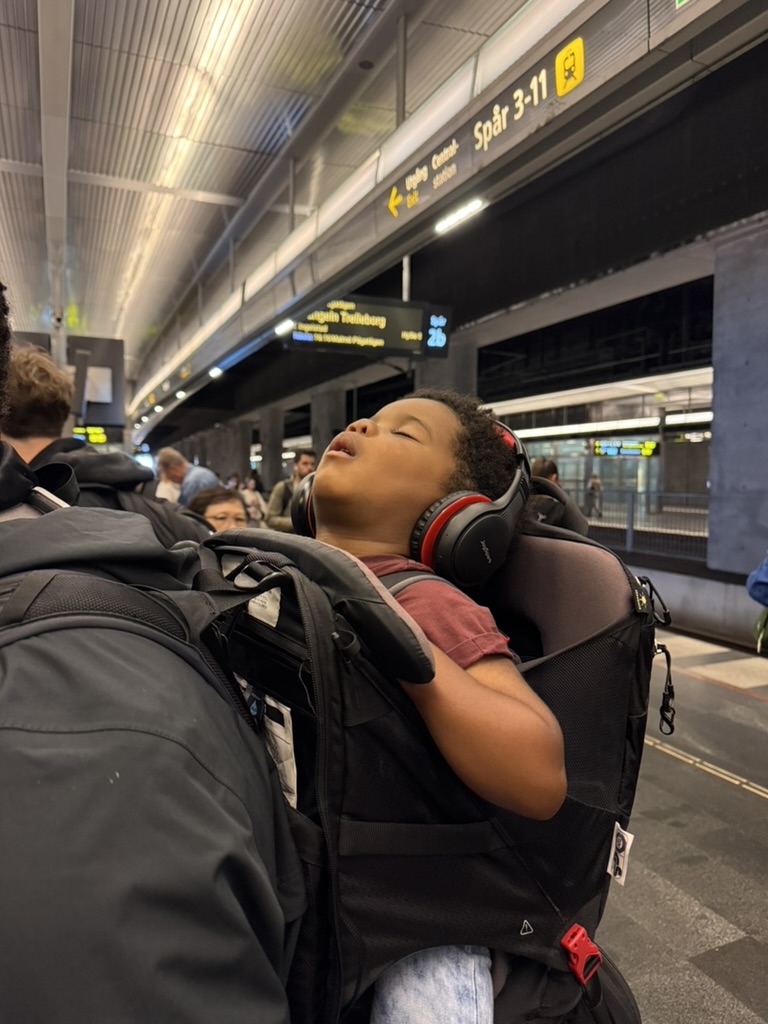
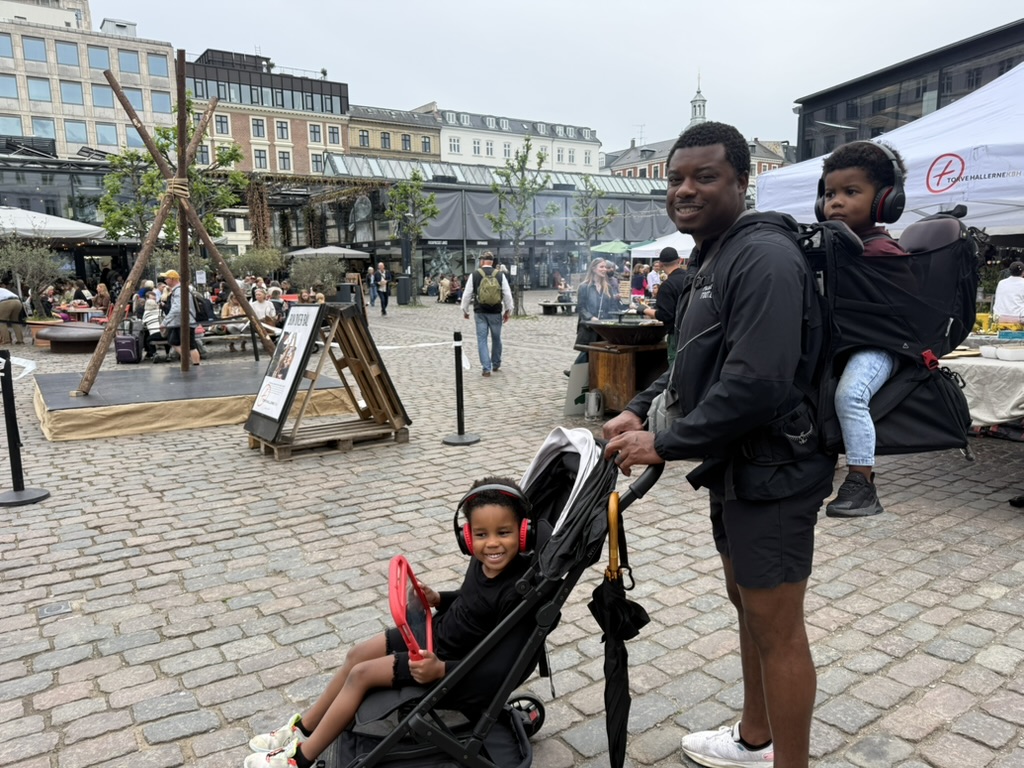
We used both a stroller and the Osprey Poco. Sidewalks, trains and stations were consistently manageable, and lifts kept us from carrying the stroller up and down station stairs. Train cars had room for both strollers and bicycles, which made family movement feel anticipated rather than tolerated.
The Transit Pass Became More Useful Than We Understood at First
We purchased a digital multi-day transit pass online and used it across the train, metro and harbor-bus network. We do not remember the exact product name, so families should match the current pass zones and duration to their own itinerary. Once we understood the system, moving across the city felt intuitive.
Bike Lanes Required Attention, Not Anxiety
Copenhagen's bicycle traffic never felt confusing or stressful, but it did require us to keep our eyes up. We checked where riders were coming from, noticed the direction of the lane and avoided drifting while looking at a phone. The system worked because pedestrians respected that a bike lane was active transportation, not empty sidewalk space.
Early June Called for Flexible Layers
Most days worked with shorts and a jacket or pants and a T-shirt. We could sometimes have managed shorts and a T-shirt alone. The 30- to 45-minute downpour at Tivoli was the exception, and we simply moved inside for food until it passed.
Notice When a City Removes the Friction
Family travel advice often focuses on the attractions that welcome children. Copenhagen showed us that the spaces between attractions matter just as much. A lift at the station, room for a stroller on the train, a sandbox beside adult food, a harbor bus included in the transit pass and a park near the apartment each removed one small negotiation from the day.
No single convenience explains why the city felt so livable. The effect came from repetition. Children were visible in Copenhagen's design: learning the road rules at a playground, fitting into public transportation, finding real play spaces inside major destinations and moving through the same public life as everyone else.
That changed what the adults received too. We did not have to choose between the trip we wanted and the trip the boys could handle. Reffen could be our favorite because a sandbox and slide helped it work for them. Nyhavn could remain beautiful because lunch happened somewhere more flexible. The city gave us enough support to enjoy it on its own terms.
A family-friendly city is not one with a children's attraction. It is one that keeps making ordinary family life easier.
Easy Did Not Mean Inexpensive
Food Was the Clearest Tradeoff
Copenhagen's food was consistently good and consistently expensive. Food halls helped us control the risk of buying meals the boys might not eat, but they did not make the city cheap. The quality and variety made the spending feel worthwhile; families should still build realistic room into the dining budget.
The Airport Reversed the City's Usual Pattern
After the final checkpoints in our departure terminal, we found vending machines with more snack variety than we might expect at home but no conventional vendor serving a substantial meal. We had planned to eat after clearing security and had to improvise. For an early flight, we would now carry breakfast or buy it before entering the final gate area.
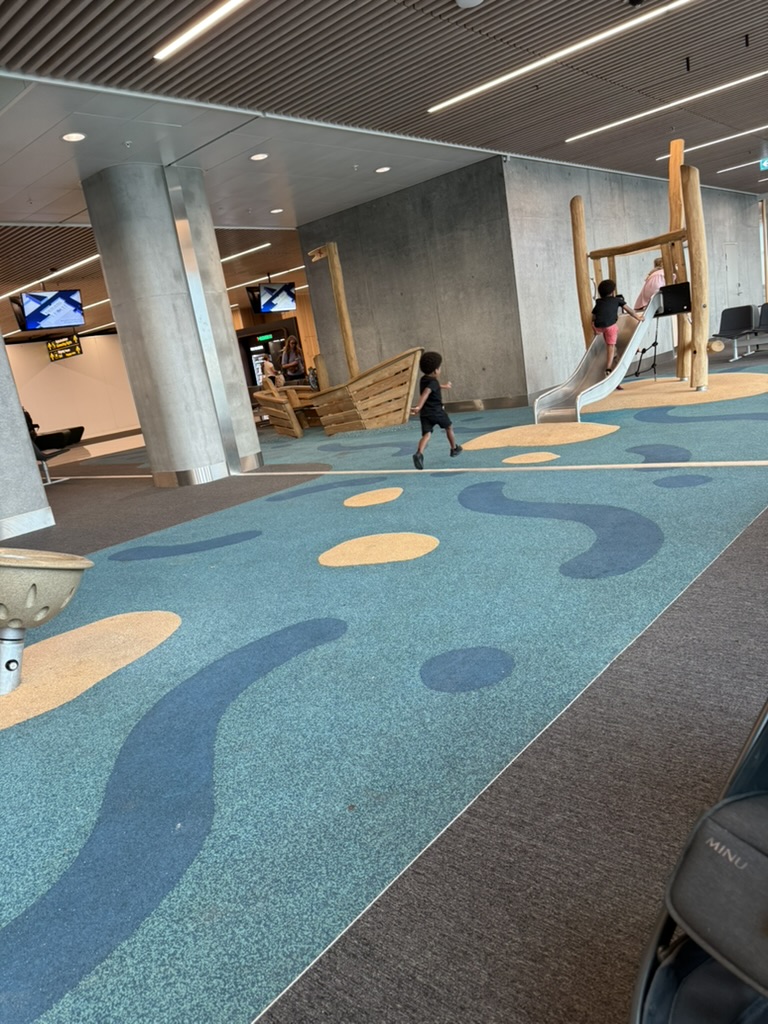
The family amenity beside the gate was excellent. A play area included a ship, miniature trampoline, slide and climbing structure. The boys played with other children from the flight and boarded after using some of their early-morning energy. The airport managed to be difficult for food and unusually thoughtful for play at the same time.
Malmö Is the First Cut, Not a Regret
If a family has fewer nights or no interest in adding another country, Malmö is the easiest day to remove from the itinerary. The essential Copenhagen experiences already fill the itinerary. We would still keep the day. The clean train, excellent playground, strong lunch and chance to enter Sweden made it worthwhile without requiring an elaborate plan.
Five Nights Was Right, but the City Could Hold More
Five nights gave us a strong minimum experience. We would not shorten the trip unless necessary. At the same time, Copenhagen felt livable enough that seven nights or a slower summer stay would not have been excessive. We left with more to do, not because the itinerary failed, but because the city invited us to settle in.
What We Would Repeat and Adjust
What We Would Do Again
- Stay five nights or longer in a two-bedroom Latin Quarter apartment.
- Use a digital multi-day transit pass and treat the harbor bus as both transportation and an experience.
- Start the first full day with Juno the Bakery and the Children's Traffic Playground.
- Walk through Nyhavn, then eat more flexibly at Broens Street Food.
- Visit Reffen twice and order Baobab's domodar at least once.
- Keep the Malmö day trip loose: center, playground, food hall and enough time to wander.
- Give Tivoli most of a day and choose rides based on the boys' actual comfort rather than assumptions.
- Spend at least four hours at Experimentarium and allow longer for older children.
- Use nearby parks to fill opening-time gaps without adding pressure.
- Carry both the stroller and Osprey Poco, because each solved a different need.
- Keep predictable food available for Avery while letting the adults build the route around Copenhagen's bakeries and markets.
- End the trip at Reffen and take one final walk through Nyhavn.
What We Would Adjust
- Identify Tivoli's playground on the map before beginning the rides.
- Print or collect prepaid Tivoli ride wristbands at a kiosk immediately after entering.
- Use the harbor bus for Reffen earlier instead of making the entire first journey on foot.
- Match the current transit-pass zones to Malmö and airport plans rather than assuming one product covers everything.
- Carry an early-flight breakfast or buy food before passing the final airport checkpoints.
- Protect a little more unplanned time if staying seven nights, because the city rewards ordinary park and neighborhood hours.
Who Is This Trip For?
Copenhagen works especially well for families who want a true city experience without asking young children to spend every day inside adult attractions. It suits travelers who enjoy food, public transportation, parks, design and walking. The city is particularly strong for families willing to treat playgrounds and everyday infrastructure as meaningful parts of the destination.
The City We Could Imagine Living In
Copenhagen became one of our favorite cities because it gave us more than a successful vacation. It gave us a glimpse of a different everyday rhythm. The quiet streets, bicycles, clean trains, parks and visible children made the city center feel humane rather than hurried.
The boys' favorites captured that range. Avery loved the Experimentarium, where nearly every surface invited participation. Preston wanted to return to the Traffic Playground and Tivoli's laser ride. Kyle and I chose Reffen without hesitation. No one had to inherit someone else's favorite for the family to call the trip a success.
Five nights allowed us to see the city clearly. Seven or more would have allowed us to live inside it more slowly. That is the unusual appeal of Copenhagen: the essential itinerary is excellent, but the ordinary version of the city may be what makes a family want to come back.
We will return. Not because we failed to complete a list, and not only because the food was memorable. We will return because Copenhagen made a capital city feel calm, playful and shared.
We left Copenhagen with more still to do — and with the stronger feeling that we could simply stay.
A Playground Beside the Gate Closed the Trip
The return day began early. The limited food beyond the final airport checkpoints caught us off guard, but we found enough from the vending options to make the morning work. The adjacent play area changed the boys' experience completely. They climbed, slid, bounced and played on the ship with other children before boarding.
We connected through JFK and reached the lounge by approximately 2:00 p.m. Several hours later, we were home in Columbus without any major travel problem. The airport playground felt like one final Copenhagen detail: even when the adult logistics were imperfect, someone had made room for kids to be kids.
Travel Thoughtfully. Explore Together.
Practical Planning Guide
Everything we booked, rode and learned across Copenhagen and Malmö — the Latin Quarter base, the transit pass, the food halls and the day trip — gathered in one place so you can plan your own version of the city.
Before You Book
- Choose a central base that makes walking realistic; the Latin Quarter worked especially well for Tivoli, the central station, Nyhavn and everyday meals.
- Prioritize separate sleeping space and laundry if the apartment will anchor a longer multi-stop trip.
- Compare current transit-pass zones and durations against the airport, Experimentarium, Reffen and Malmö plans.
- Verify current Traffic Playground hours, bike availability and child size or age requirements before traveling across the city.
- Check Tivoli's seasonal opening calendar, admission options, ride-pass process, ride requirements and current family facilities.
- Review Experimentarium hours and ticket options; tickets were easy to purchase on arrival during our stay.
- Check current Reffen and Broens Street Food operating seasons and vendor rosters because outdoor food-market details can change.
- Confirm train documentation and ticket coverage before crossing into Sweden, and carry passports or other required identification.
- Arrange an airport transfer with suitable car seats if that makes the arrival easier than solving transit after a long flight day.
- Plan food before an early departure and do not assume substantial dining remains available beyond the final airport checkpoints.
Where We Stayed
- Modern two-bedroom Airbnb in Copenhagen's Latin Quarter.
- One bedroom for Kyle and Avery; one bedroom for Preston and me.
- One bathroom, living room, kitchen and laundry.
- Courtyard setting with several neighboring apartments in the same building.
- No elevator; approximately one or two flights of stairs.
- No remembered air conditioning, but none was needed in the early-June weather.
- Walkable access to Tivoli Gardens, Copenhagen Central Station, Nyhavn and the city center.
What We Did
- Borrowed child-sized bikes and helmets at the Children's Traffic Playground in Fælledparken.
- Walked Nyhavn several times and photographed the clearer-sky water reflection.
- Ate at Broens Street Food and visited Reffen twice.
- Took the train to Malmö for Sollekplatsen, Malmö Saluhall and a loose city walk.
- Visited Freetown Christiania after returning from Sweden.
- Spent almost a full day at Tivoli after a playground stop in Ørstedsparken.
- Spent approximately four hours at Experimentarium.
- Used the harbor bus to reach Reffen and return toward Nyhavn.
Where We Ate
- Tivoli Food Hall for four different arrival-night meals, including Cock's & Cows.
- Juno the Bakery for cardamom buns and other pastries.
- Broens Street Food for a flexible lunch near Nyhavn.
- Reffen for Baobab's domodar, The Real Greek, Nordic Hotdog, Fuego, Indian Bites and churros with ice cream.
- Sankt Peders Bageri for pastries and iced coffee.
- Malmö Saluhall for Maya Cantina tacos and a POMS Öl & Mackor sandwich.
- Gasoline Grill inside Tivoli for burgers during the rain.
- Ø12 Coffee & Eatery for pancakes, eggs and bacon before Experimentarium.
What We Packed and Arranged
- Prearranged Copenhagen airport transfer with car seats.
- Stroller for long city days and nap walks.
- Osprey Poco for an alternate way to carry Avery.
- Flexible layers for pants-and-T-shirt or shorts-and-jacket weather.
- Rain protection for the stroller and family during short summer downpours.
- Predictable food and fruit for Avery when the day's menus were not a fit.
- Passports and current cross-border documents for the Malmö day trip.
Our Most Helpful Advice
- Let Copenhagen's public life become part of the itinerary. The Traffic Playground, neighborhood parks, trains and harbor bus were not filler between major attractions. They were some of the experiences that explained the city most clearly.
- Use food halls strategically. They gave the adults excellent food while letting each child eat something realistic, and the most successful ones — especially Reffen — offered enough space for the family to remain together without sitting still.
- Keep your eyes up around bicycle lanes, but do not let the cycling infrastructure intimidate you. Once we watched the lane direction and treated bike traffic with the same attention we would give cars, moving through Copenhagen felt straightforward.